


airplanesleddog
Monthly Subscription
-
Joined
-
Last visited
-
Very timely advice - I did some more reading and realized I had mistook the A/C compressor for the water pump. The water pump pulley has a fair bit of play in it. Added water to the radiator and it swiftly resumed leaking, it appears to be from the water pump or its footprint. Supporting that assumption - the radiator doesn't drain completely. There's at least an inch or two of water still at the bottom, and that looks like it corresponds to the height of the water pump. New pump on order and will replace when it gets in. Is there a test for checking the alternator, or are you just referring to the pulley rotating freely without play? Correct. I'm wondering if the dash computer needs to see some drive cycles or engine running time, to flush those codes out. Your point about changing the filters is well taken, thank you for the suggestion.
-
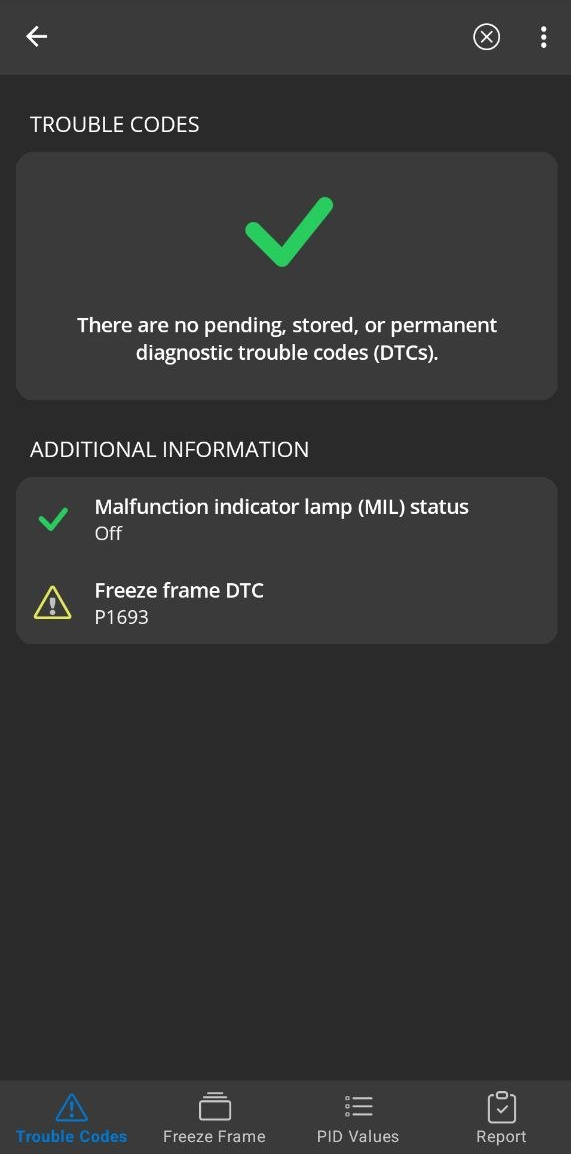
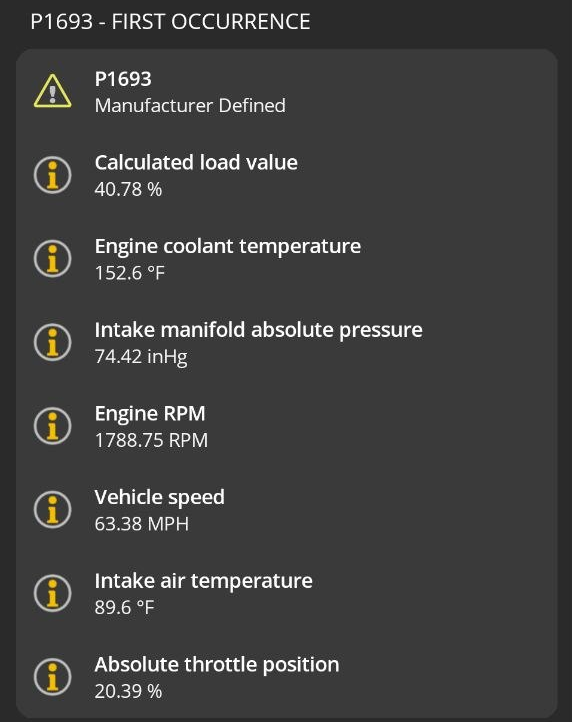
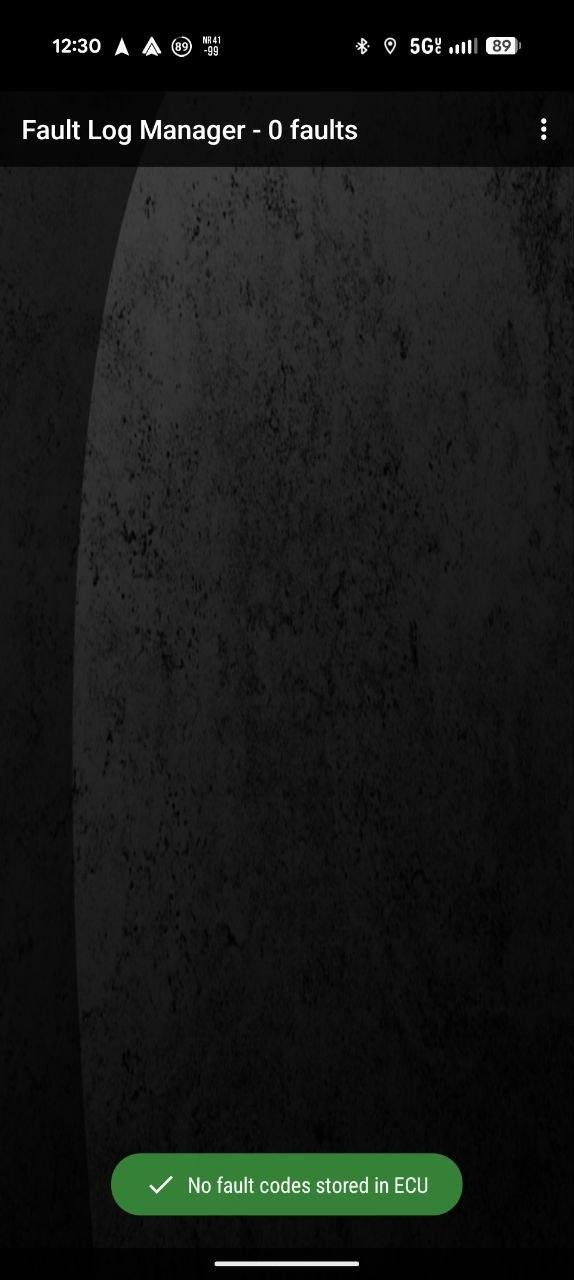
Yes... I think. I have an OBDLinkMX+ adapter, the OBDLink app, and the Torque app. The OBDLink app has supplemental data packs available, but only go back as far as 2006 for Dodge. Torque reports "No fault codes stored in ECU" OBDLink reports "No pending, stored, or permanent DTCs", but also shows a 'Freeze Frame DTC' for P1693. It appears to have saved the parameters at the first occurence of that code, and they correspond to normal highway driving. If I had to guess, this would be when the voltage gauge pegged on the low side. That said, these codes continue to be shown on key on/off/on/off/on: P PCU P 1682 P 1693 P ECU P 0217 P 1693 I did try loosening the low pressure banjo bolt at the fuel pump and bumped the starter - did get a stream of fuel coming out.
-
Thank you for the crosscheck - I didn't think it was particularly cause for concern or related to the real issues here, but wasn't sure. To your questions: The voltage gauge was pegged to the low side. There is not a fuel pressure gauge that I'm aware of, and the lift pump appears to be stock. (no Airdog/FASS units installed, if that's what you're asking) I do hear a noise after bumping the starter, although I can't tell for certain if it's the pump. It sounds kinda rough, kind of raspy. It sounds like an electric shaver if you press on the combs a little bit. Thanks for the suggestion for the radiator pressure tester, and the suggestion to focus on the coolant leak!
-
Hi there - Several different issues just started, and I'm not sure how to begin addressing these. Hoping that folks with a good understanding of the 24V can help sift through the symptoms and see to the core of the problems. Looking for help organizing and figuring out if there is an underlying root problem that's causing the other issues. Vehicle: 2001 Ram 2500, 5.9L High Output Cummins, 4x4, 292K miles. I only have about 3k miles on it myself since I bought it. Don't have a great idea of what was done to it before. As far as I can tell, the engine and powertrain are in a stock configuration. History: Until January of this year, it was always quick to start with minimal cranking. After sitting for about a month, it took an unusually long time (let's say about 8 seconds) to crank and start. I used it for several days after that, and had no more issues - it just happened the first time after sitting. The long starting time has happened intermittently since then, but not very frequently. Maybe just one or two times. The truck gets used for several days, and then parked for about a month. The event: The truck was straight piped, but I just installed a generic straight thru muffler (following the recommendation in this thread ). Took the truck out for a test drive and it is a lot quieter, although it was making a whistling noise when letting of the accelerator. During that drive, on the freeway, the dash chimed and the 'CHECK GAGES' light came on. I glanced at the dashboard and noticed that the voltage gage was bottomed out. Didn't notice anything else, but wasn't looking that closely. There was no noticeable effect on the truck - it continued driving the same, the radio stayed on, etc. I assumed the sensor had failed or come loose from its connection. I turned around a few minutes later and accelerated moderately hard as I came back onto the highway. A moment later, the dash chimed again and I saw the temp gauge was reading high (out of the normal range but not yet to the redline), and climbing. I tried to take it easy on the way home and not build up any unnecessary heat. There were several minutes spent at low speed or idling at traffic lights, and in total it took 10 - 15 minutes to get home after the chime. The needle was very close to the red line, by the time I turned the truck off. There was coolant splattered around the engine bay and the underbody of the truck, even into the right side wheelwells. I left the hood open to let the engine bay cool down, and left it alone until after work the next day. Found a trail of coolant on the front side of the lower right corner of the block, right where the water pump mounts, but have not been able to find where its coming from. When I opened the radiator cap, the leak became active as a small trickle. Wasn't able to see the source, because of grime buildup. I started the truck (it fired normally), and it ran for perhaps 10 seconds, and then quit. Tried to start it again, but it would crank but not fire. The starter sounded sluggish and was getting weaker and weaker. Sprayed the area around the leak with engine cleaner and rinsed with water. Put a battery charger on the truck and left it overnight. Current condition & symptoms: The radiator is almost empty (it must have continued to leak overnight), almost to the bottom of the radiator. The coolant reservoir is almost full. I'll add coolant and see if I can trace the source of the leak. The initial suspicion was that the alternator and/or water pump had failed, and the serpentine belt was stuck or slipping. According to the service manual, there's a square drive in the belt tension arm; I used a breaker bar to release the tension in the belt. The alternator pulley could be turned by hand. The water pump pulley could be turned by hand, but it seems like there's a clutch mechanism in it. The pulley wheel itself rotated freely around the hub of the pulley. I was able to rotate the hub by hand as well, although it had a lot more resistance. The engine still will not start, although it cranks just fine. The starter sounds normal, after charging the batteries. The voltage gauge works and indicates a voltage when the key is on. Following the service manual instructions for bleeding air/priming, I loosened the low-pressure supply banjo bolt on the fuel pump, and bumped the starter to engage the lift pump. Fuel poured out from the banjo bolt. Used an OBDII tool and found code P1693. Used the key on/off procedure to read codes from the odometer screen: P PCU P 1682 P 1693 P ECU P 0217 P 1693 Where I'm stuck / Analysis: The error codes seem to just relate to the low voltage and over temp condition. It does not seem like these would have any bearing on the no-start issue. Some google searching would suggest that I should check for fuel pressure at the injector lines next. From reading various forums it sounds like a no-start condition can come from a failing injector pump, but that usually has its own set of trouble codes - which this truck does not have. The engine ran just fine up until it didn't. There was no noticeable loss of power or responsiveness, and it idled just fine for several minutes at stoplights until I turned it off with the key. This would suggest the fuel / air / compression conditions were all being satisfied. It has never just died on its own, until the other day, when it only ran for like 10 seconds. Was wondering if the overheating engine could cause fuel delivery problems, like on a carbureted boat motor - but I don't think these motors and fuel systems can work that way? Do any of you see a way that these issues are related? What should I be doing to isolate/diagnose from this point? Or is this all just a giant set of coincidences, and each issue should be individually chased for a fix? Thanks in advance!