


Moving the Water Heater Closer to the House: Why It Matters

November 2, 2026
Winter is coming to New Meadows, and the garage doesn't forgive cold water lines. The old spot for the water heater was too far from the living quarters. That meant long runs of pipe sitting in a space that gets well below freezing, and every cold snap was a gamble. So today Mark and I moved it.
The new home is against the white wall on the house side of the garage, as close to the living quarters as I can get it. It's a 40 gallon electric unit with 2500 watt elements, and it now sits on a plywood platform so the bottom of the tank stays up off the slab and out of any moisture. Under the tank is a drain pan with its own drain line, so a slow leak gets caught and carried away instead of soaking into the floor.
The Theory Behind the Move
An electric water heater turns almost every watt it pulls into heat, so there's not much efficiency to squeeze out of the element itself. The savings come from the heat you lose before the water ever reaches the tap. That loss shows up in three places:
Pipe length. Every foot of hot water pipe between the heater and the faucet is a foot of hot water that cools off between uses, and a foot of cold water you have to run out before the hot arrives. A shorter run means less heat wasted and less water down the drain waiting for it.
Cold surroundings. A tank loses heat to the air around it, and the colder that air is, the faster it leaks. A heater sitting in an unheated garage in January works harder to hold its temperature than one sitting against the warm side of the house.
Freeze risk. Long runs through a cold space are exactly where lines freeze. Shorter, warmer runs are cheaper to heat and a lot safer.
That's also why the cabinet matters. Foam board around the tank cuts how fast it sheds heat into the room, so it cycles on less often to hold temperature. I haven't put a meter on it, so I'm not going to throw out a savings number, but the logic holds up and I'll report back on how it behaves this winter.
A few things we did on purpose:
Flex connectors on the hot and cold lines, with a shutoff valve on the cold side. When this tank wears out in 10 or 12 years, swapping it will be a lot easier.
Relief valve line run the full size of the valve outlet, downward only, with no cap or threads on the end.
Separate pan drain so the pan and the relief valve each have their own path out.
Fill before power. The tank gets filled until water runs steady at a hot tap before the breaker goes on. Powering up a dry tank burns out the elements in seconds, and that's the one mistake you can't take back.
Next up is the cabinet. We've got the framing started with pink foam board on the walls to hold the heat in and keep the cold out. The plan is a removable front panel so the thermostats, element covers, and drain valve stay reachable. The anode rod on top also needs headroom so I'm not fighting it down the road.
Two old guys, a cold garage, and a tank full of water. It's not fast, but it's getting done right.
More photos once the cabinet is closed in.
— Titanium
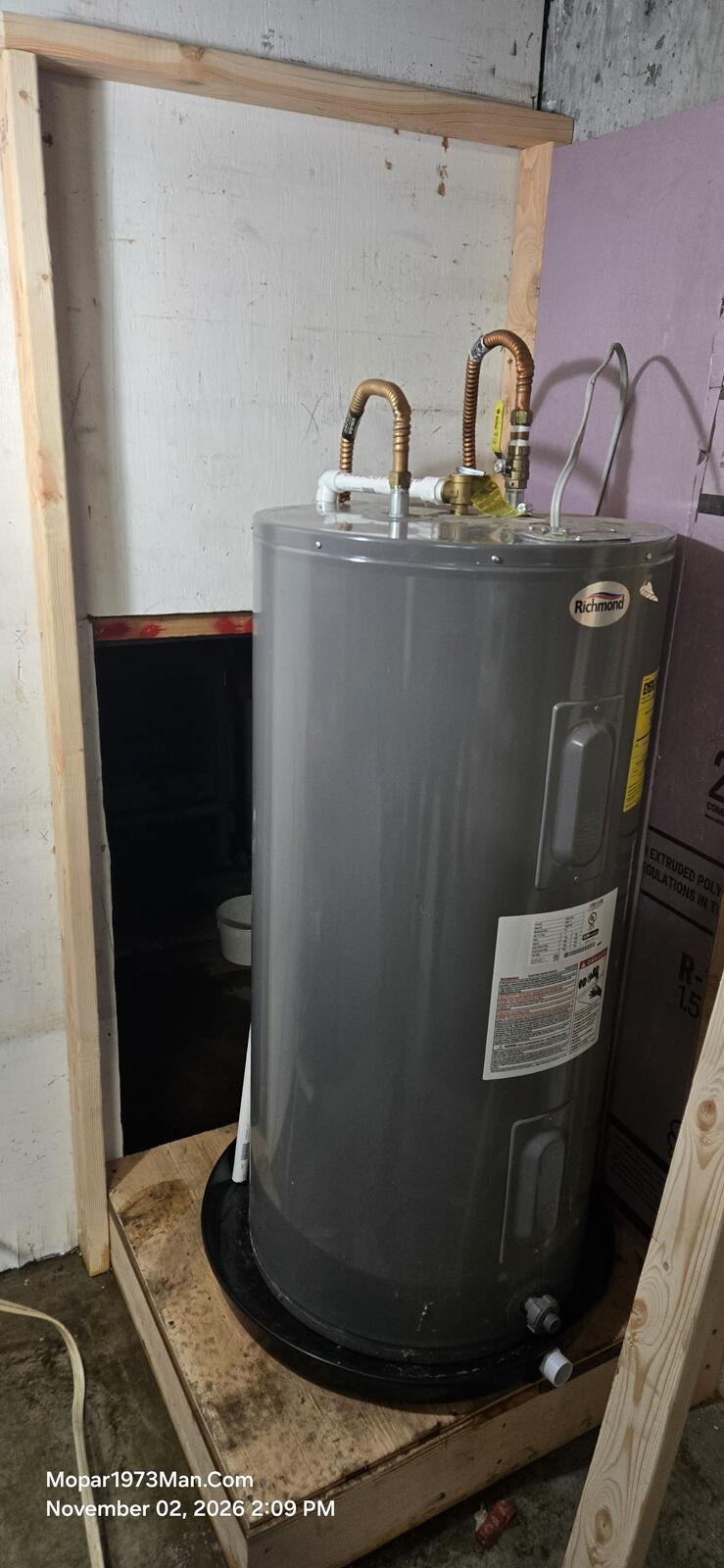
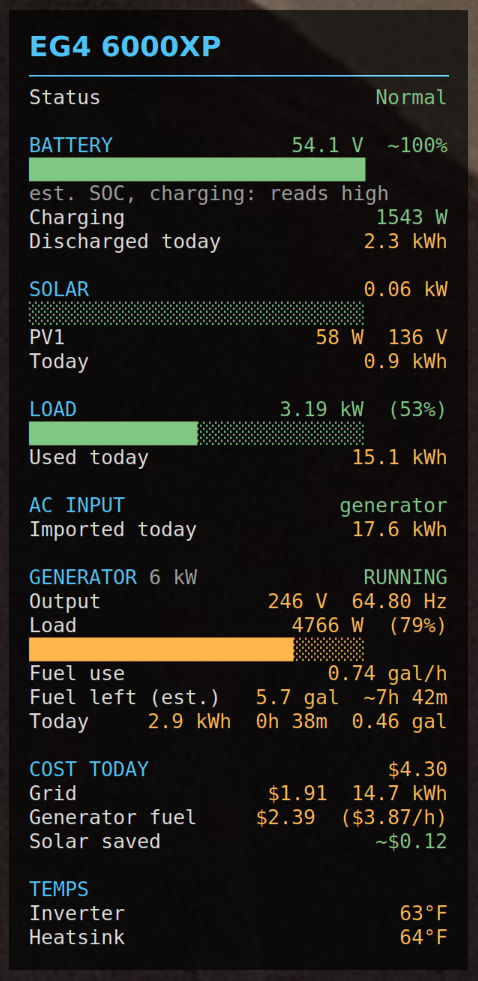
Running the genrator to reload the water heater with hot water! Gotta love Linux for allowing you to create custom information display on your desktop.
Edited by Titanium
Recommended Comments