Jump to content
View in the app

A better way to browse. Learn more.

Mopar1973Man.Com LLC

A full-screen app on your home screen with push notifications, badges and more.

To install this app on iOS and iPadOS
  1. Tap the Share icon in Safari
  2. Scroll the menu and tap Add to Home Screen.
  3. Tap Add in the top-right corner.
To install this app on Android
  1. Tap the 3-dot menu (⋮) in the top-right corner of the browser.
  2. Tap Add to Home screen or Install app.
  3. Confirm by tapping Install.

Working through miss/studder issues - codes 0237 & 0230

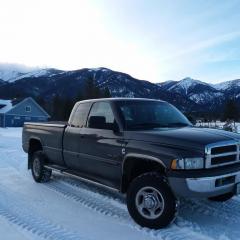
I picked up a 2000 Ram 2500 with the Cummins a few months ago. The PO said that he'd replaced the fuel pump a couple of times, which I should have paid more attention to. Ran fine though for a few months. Recently I had a big miss, or shudder under heavy acceleration onto a highway but ran fine for the rest of the trip. It happened several more times on later trips, usually at gradual acceleration. No CEL at that time. I did get the 0237 code, so got a new MAP sensor hoping that would fix it, but it didn't. I cleaned all grounds and harness connectors. Since then, a few test drives have been OK, with no missing, but even though I cleared the codes, they come back.

I have AutoEnginuity, so got the Chrysler enhancement package and found a few things. The MAP sensor checks out with 5.2V key on engine off. Test run yesterday, backing out of the driveway the voltage dropped to 4.93 briefly. Once going down the road, it stayed above 5V and responded seemingly correctly to acceleration. I suppose that the brief drop below 5V would be enough to throw a code. Let me know if otherwise. I haven't tried bending the diaphragm yet as described in a HOW TO DIAGNOSE VP44 FUEL SYSTEM ISSUES document.

Another thing I noticed was that the VP44 input voltage was dropping from 12.18V down to ~9V. Occasionally it would jump up to 13.5V, which is what I was measuring at the battery when it was running and the alternator was charging. 12.18V was what the battery read before starting. They were brief excursions either way, but it got progressively more frequent going down to 9V as my test drive went on. I can log and provide these charts.

The Banks tuner was unplugged during my testing, but was plugged in when I first started having the miss/shudder issue.

I thought I might be in limp mode, but I was getting boost pressures of 5-8 psi with just moderate acceleration on a test drive yesterday. Didn't feel too bad.

  • Replies 40
  • Views 955
  • Created
  • Last Reply

Top Posters In This Topic

Most Popular Posts

  • Tractorman
    Tractorman

    There is a single connector with two black wires that are connected to the positive post of the driver side battery. These wires supply power to the intake manifold heaters (grid heaters). Within a fe

  • Tractorman
    Tractorman

    You can just swap out another like fuse and another relay and go for a quick test drive. John

  • Mopar1973Man
    Mopar1973Man

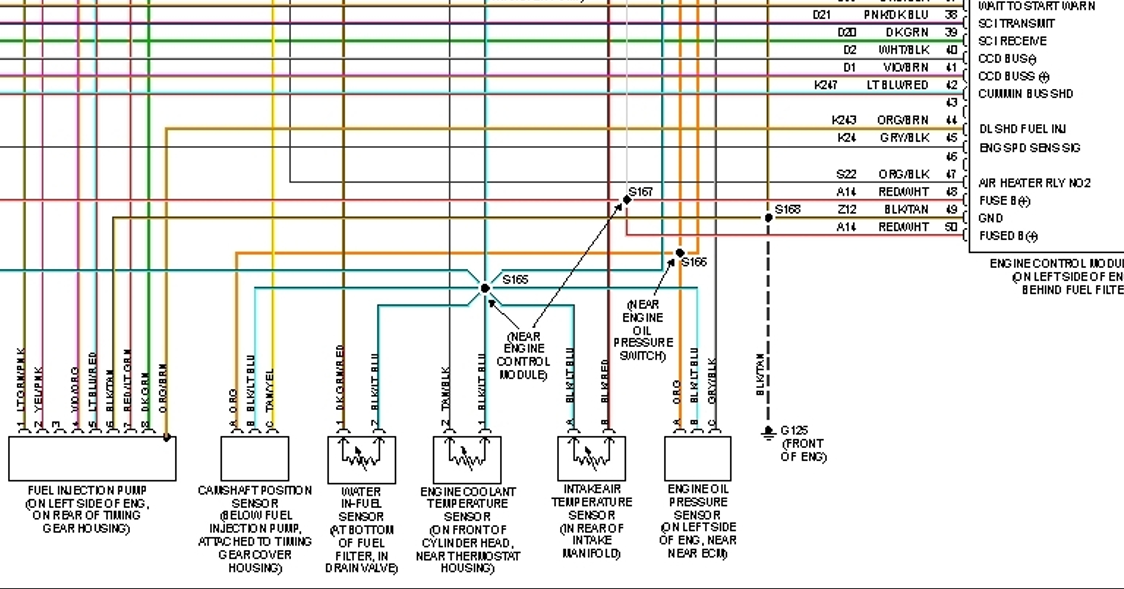
    On the Dodge FSM it will list wire colors and gauge size.
Posted Images

Featured Replies

4 hours ago, timsch said:

Is there a reference that shows what wire gauges are used?

Hope this helps for battery wire sizes.

  • John

image.png

  • 3 weeks later...
  • Author

I got some of the battery cable upgrading done. One part not done was rerouting the power cable from the alternator to the auxiliary battery. Now it goes over to the power distribution center. In my case it connects with one hole only. It has 2 holes and looks like it could mount through both and go to the 140A fuse. Is mine hooked up right? Is this 140A fuse not reliable, which is why I've seen using a 140A breaker rather than just hooking to the aux battery?

IMG_0384.jpeg

Another thing - when looking how to get to the ECM plug, I noticed that my OEM fuel filter housing was there with the electrical connections plugged in. Does having those plugs disconnected cause problems? I've seen vids where this housing had been removed.

2 hours ago, timsch said:

It has 2 holes and looks like it could mount through both and go to the 140A fuse. Is mine hooked up right?

Yes.

2 hours ago, timsch said:

Is this 140A fuse not reliable, which is why I've seen using a 140A breaker rather than just hooking to the aux battery?

The 140 amp fuse is reliable. It is not used on the passenger side battery because it has no fuse holder. People typically buy a 150 amp fuse (with holder) of their choice to use on the passenger side battery. I have changed mine to this setup three years and 35,000 miles ago. It has been working fine.

  • John

  • Author

This morning was the 1st test after all of my wiring and termination work. There are a few details to finish up, but nothing that should be that critical. I did disconnect the ECM, sprayed it out with Deoxit 5 and reconnected it. I did not remember to check the wires as suggested in the Man's post on Oct.14th.

It was missing worse than ever. Only at heavier acceleration though. Gentle acceleration is fine; cruising is fine; as soon as I need some get up and go when already moving is when it starts cutting out. I can gently get to highway speed, but that's about it. I did not log this time, so have no data to go with this update.

I re-read all of your posts. Do you still get voltage fluctuations at the injection pump, especially under acceleration? If so, those low voltage readings on your original graph could cause the fuel solenoid to misfire.

Something that has not been discussed is fuel supply. If the injection pump is continuously getting the proper voltage, then maybe the fuel supply is inadequate during hard accelerations. Do you have an operational fuel pressure gauge in the cab?

  • John

  • Author

No log this morning, so I do not know about the voltages. I do have a pressure gauge in the cab, and it reads a steady 16 psi.

One thing I've not looked into is the throttle position sensor (I forget what it's called on the Dodge). I recall people having issues with that, but don't know what the symptoms of that are.

4 hours ago, timsch said:

One thing I've not looked into is the throttle position sensor (I forget what it's called on the Dodge). I recall people having issues with that, but don't know what the symptoms of that are.

APPS (accelerator pedal position sensor) on the Cummins. When the APPS becomes output signal becomes intermittent as it ages, a specific code is usually set and the engine typically goes right to idle - referred to as "dead pedal". The dead pedal lasts for about 10 seconds or so, then goes back to normal until the next event.

4 hours ago, timsch said:

No log this morning, so I do not know about the voltages.

The photo below is from one of your earlier posts. I would be specifically concerned with re-checking the voltage to the injection pump. Voltage falling down to 9.5 volts could easily cause intermittent operation of the fuel solenoid valve in the injection pump resulting in random injection events not happening. This does match your symptoms.

  • John

image.png

  • John

  • Author

graph120425.png

Here is a log I ran tonight. I had several accelerations where it cut out, some multiple times. Every significant acceleration had cutouts. Some patterns here, but not 100% consistency. Battery voltage @ pump has improved, but still has drops; they don't match up with the cutouts though.

I have never done the type of testing that you are doing, so I don't any experience here. But, it would be good to see the same tests performed on a good running VP44 truck and compare the results. Is that possible for you to do?

Is the bottom horizontal scale "time in milliseconds"?

When the engine cuts out, does it feel like is a random cylinder misfiring, or does it feel like all injectors quit firing briefly?

  • John

Edited by Tractorman

  • Author

I have a good mechanic friend who has a 12V 5.9 - so close, yet so far.... I do have a co-worker with a Gen3 which should be the same IIRC. He'd probably be willing to let me plug in and take a similar log. Thanks for the suggestion. That 1st friend is a pro, so has the good equipment. I'm close to asking him to plug his in and see if the results are the same. My $400 setup may be lacking being consumer grade.

The bottom horizontal scale is the number of lines done during the log. Looking at the CSV file (attached)ueoa, a read is done every 180 milliseconds, and with 4 datapoints captured, each line is ~750 milliseconds.

When it cuts out, it feels stronger than just one misfiring cylinder. It's a pretty decent stumble, but this is my 1st Cummins (or large diesel even), so I'm not sure what a single cylinder misfire feels like compared to all dropping out. I'd guess more the latter. When I'm driving normally and it stumbles, I ease off to try to get it to stop immediately. Last night, I was powering through them for logging purposes hoping to make a dramatic chart and was a little surprised that it didn't really bog down on me, but rather climbed through them.

Dodge-Cummins-2000-December 04 2025.csv

5 hours ago, timsch said:

I have a good mechanic friend who has a 12V 5.9 - so close, yet so far.... I do have a co-worker with a Gen3 which should be the same IIRC. He'd probably be willing to let me plug in and take a similar log. Thanks for the suggestion.

The 12 valve engine ('94-'98) uses a P7100 injection pump - no electronics. The Gen3 engine (starting in '03) uses a common rail fuel injection system.

The only comparison engine that would work for you to test would be in a VP44 truck ('98.5-'02).

If a single cylinder is misfiring, it would feel similar to a gasoline spark ignition six cylinder engine misfiring on a single cylinder - such as a spark plug misfiring.

The misfire in your engine would feel stronger as more engine throttle and load were applied, whether or not it is a random cylinder or all cylinders. I suspect that it is all cylinders if it very jerky under power. The fuel solenoid inside a VP44 injection pump fires every cylinder, so if its electrical power source is temporarily interrupted, all cylinders will be affected until electrical power is restored.

  • John

  • Author

Looks like I'm out of luck for now getting a comparison VP44 log.

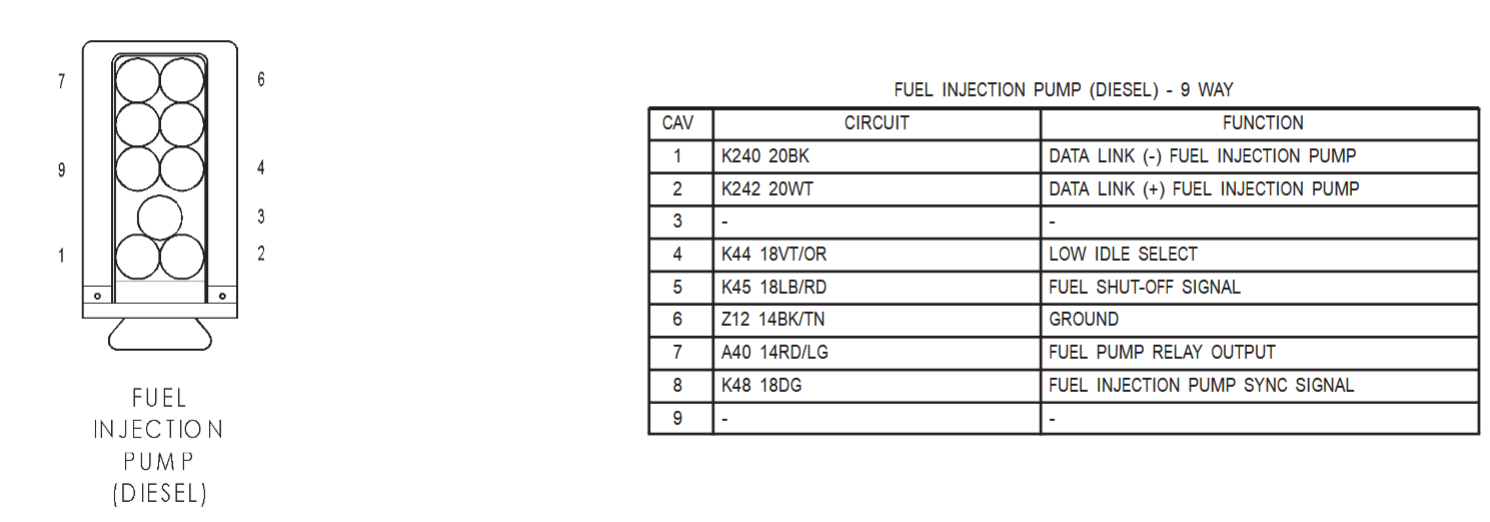
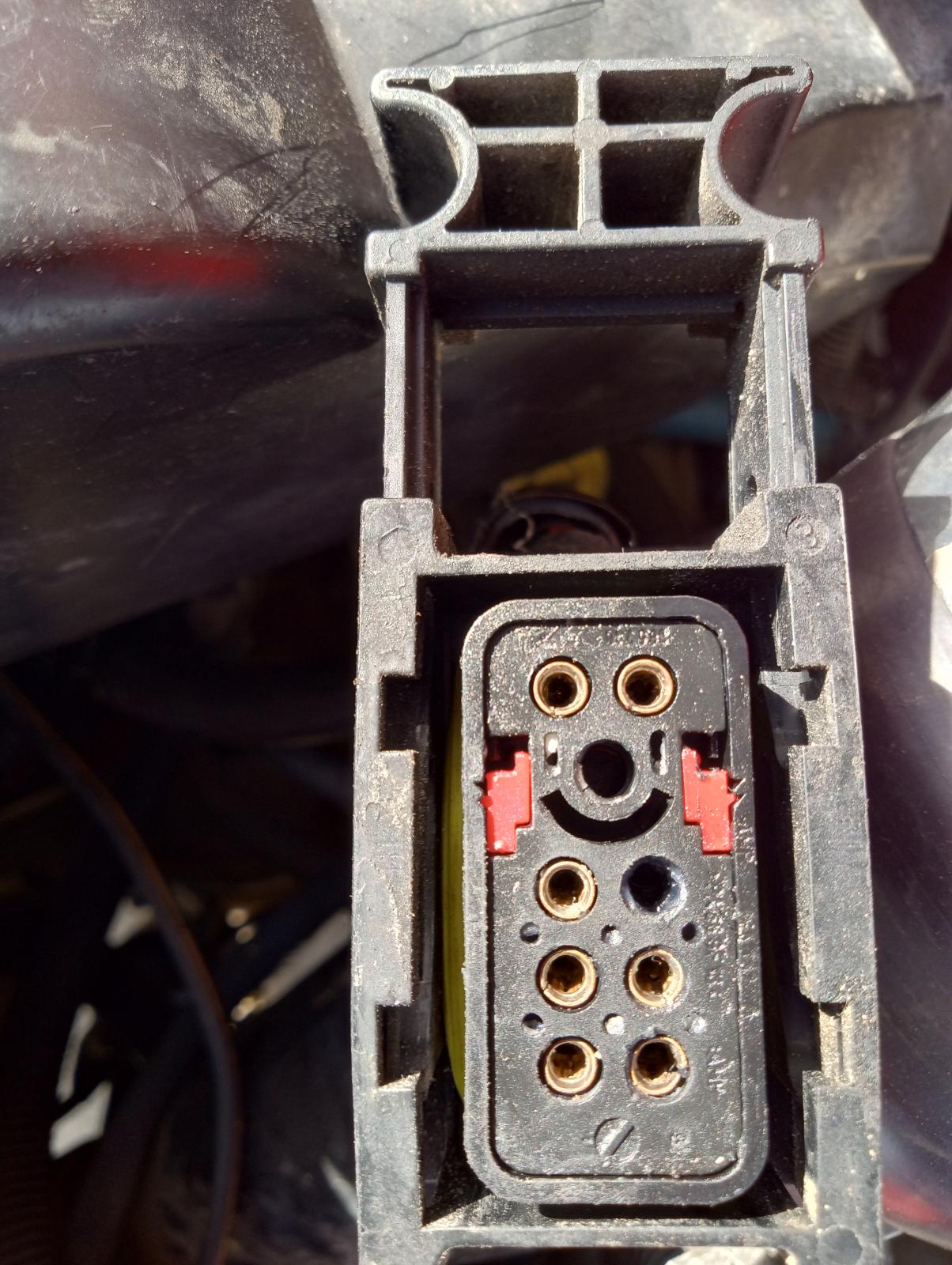
Then I need to do more focused troubleshooting on the electronics between battery and IP. To get better access, I'd like to remove the original fuel filter housing. The PO bypassed it using the FASS, but left it mounted so that the wiring plugs could still be plugged in. Any problem running with these plugs dangling?

I think the wires that you are referring to are for the fuel heater and water-in-fuel sensor. You may set a code if they are disconnected, but I don't think it will affect driveability.

I think you are on track with verifying good electrical connections between the battery, the ECM, and the PSG on the VP44.

"Volt Drop" + "Injection Pump Battery Voltage" seems to equal 14.00 volts, give or take a couple of hundredths on your graph of over 800 reading covering a 10 minute span. On some readings where the voltage is low (10.9 for example) adding the "Volt Drop" doesn't bring it to the 14.00 volt value. This could be because there is a split second recording delay from one reading to the other.

I have a scanner, but I don't know if it will display voltage at the injection pump. I will give it a test tomorrow.

  • John

I apologize for not getting back to you yesterday. I had some emergency roof repairs to do as a result of an overnight wind storm. I did try my scanner late in the day, but apparently my scanner is not capable of reading battery voltage at the fuel injection pump.

@Mopar1973Man , can you perform this test on your truck?

  • John

26 minutes ago, Mopar1973Man said:

Quadzilla can read the ECM voltage.

The concern is with his varying battery voltage at the injection pump (not the ECM), which has been demonstrated in his graph. The graph below his first graph. His most recent graph has improved, but is still unstable.

Do you have the capability to produce a graph on your truck to show what battery voltage should like at the injection pump?

  • John

image.png.217ce786e3c1c6c05b163530af5ff8ce.png

  • Author
2 hours ago, Tractorman said:

I apologize for not getting back to you yesterday. I had some emergency roof repairs to do as a result of an overnight wind storm. I did try my scanner late in the day, but apparently my scanner is not capable of reading battery voltage at the fuel injection pump.

@Mopar1973Man , can you perform this test on your truck?

  • John

No apologies needed. I appreciate your help. It's not urgent, as this is not a truck I rely upon now.

  • Author

IMG_0391.jpeg

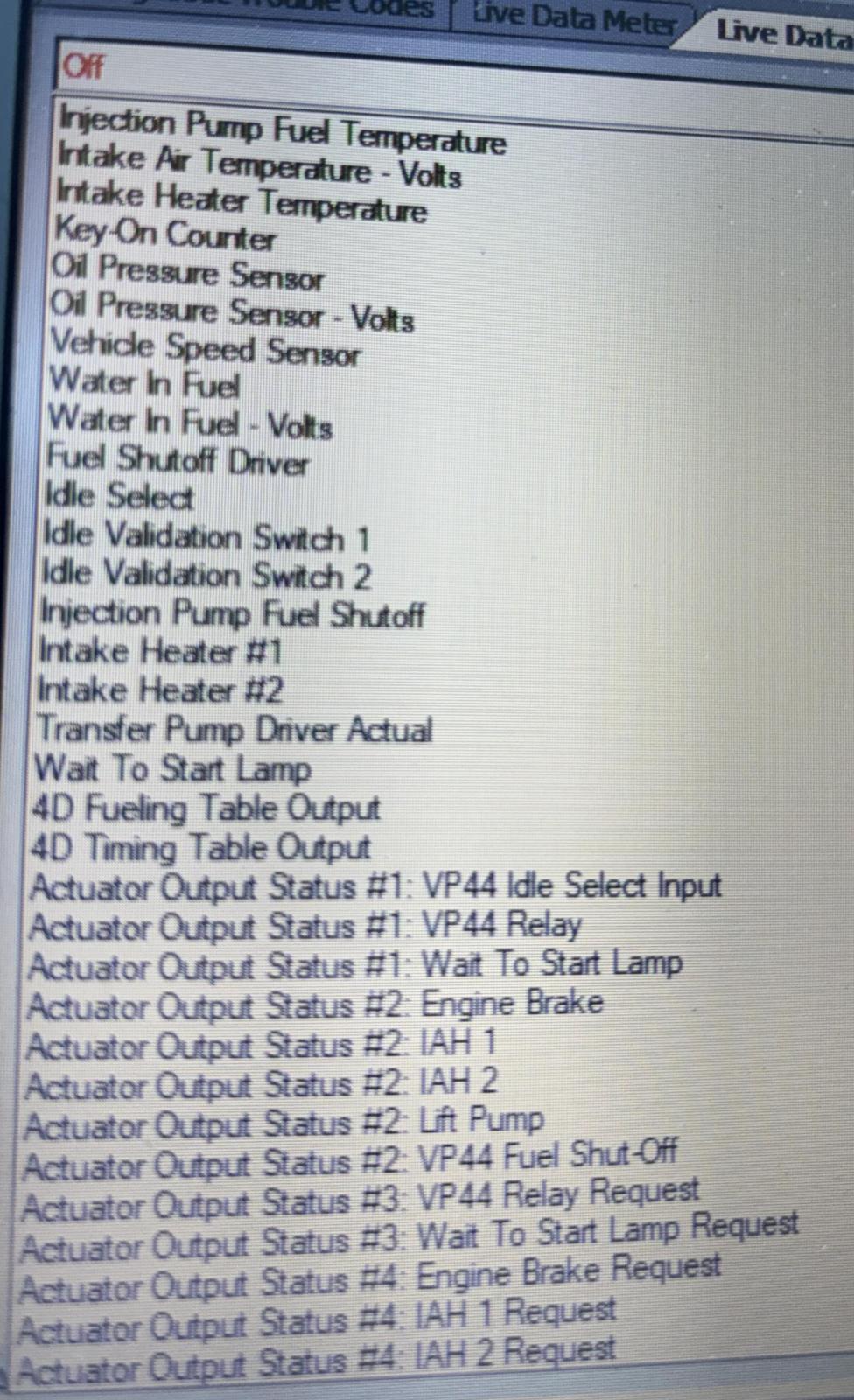
Here are the data logging options for the VP44 on my AutoEnginuity program.

Here are more:

IMG_0392.jpeg

IMG_0394.jpeg

IMG_0393.jpeg

Edited by timsch

Configure browser push notifications

Chrome (Android)
  1. Tap the lock icon next to the address bar.
  2. Tap Permissions → Notifications.
  3. Adjust your preference.
Chrome (Desktop)
  1. Click the padlock icon in the address bar.
  2. Select Site settings.
  3. Find Notifications and adjust your preference.