
IBMobile
Staff
-
Joined
-
Last visited
Everything posted by IBMobile
-
I hope they find what the problem is. Please let us know how it works out with this ECM repair shop so we can update the article "List of Verified and Reliable PCM/ECM Rebuilders" in the 24 Valve 2ed generation engine section.
-
Blue Chip Diesel has an excitant VP 44 diagnostic tests on their web site. Blue Chip Diesel | Runing Tests
-
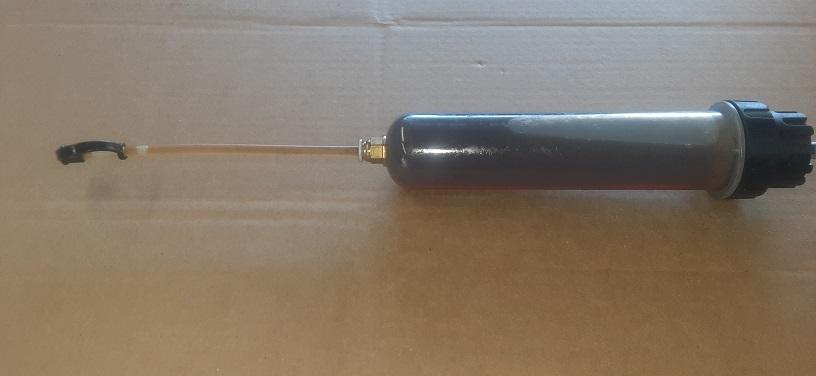
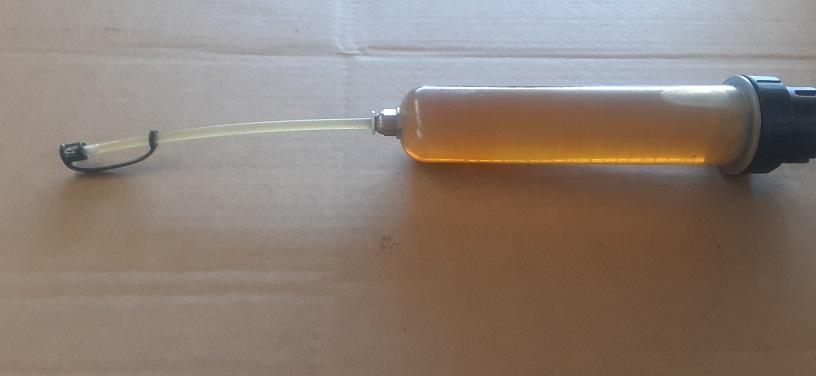
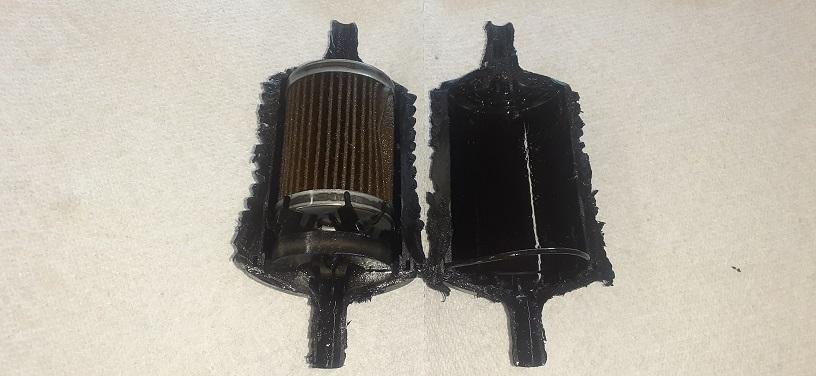
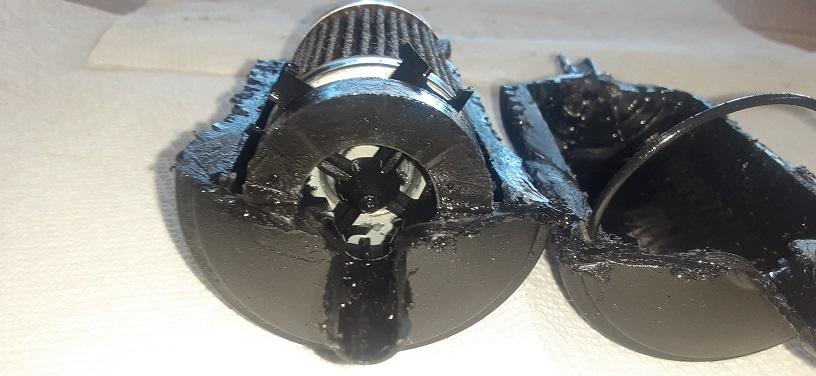
On September 6, 2016, I wrote the article "Adding inline power steering filter with system flush" and posted it in 24 valve 2ed generation/Axles, Suspension & Brakes. This is the follow up to that article. Update...7/25/2025 It has been 8years 9months and 44,888 miles since I installed the Magnefine filter and flushed the power steering system, so it was time to flush the power steering fluid and replace the filter again. I used an oil syringe fluid evacuator pump this time to remove and refill the fluid at the power steering pump. The picture below shows the first time the fluid was removed from the system It took 5 remove, refill, and run engine for 4secounds to get the fluid to this clear color, about 2qts. Here is the filter cut open. It looks like the filter could last 60,000+ miles before changing. There was just a fine film on the magnet.
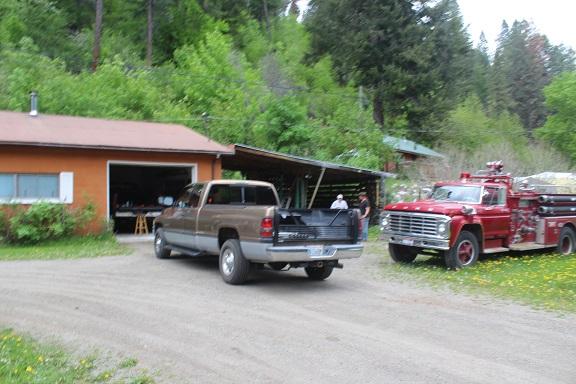
 NAPA doesn't make that filter. It's a reboxed Wix filter. NAPA adds the prefix FIL and drops the first number, in this case it's the first 3. NAPA gold Fuel Filter Part #: FIL 3585XE WIX® 2006 Dodge Ram 2500 - Fuel Filter Manufacturer #33585XESee if this helps. I can't get the hyperlink to work so search YouTube for the below title. 1980-1987 W150 727 Torqueflight & NP208 Transfer Case Removal (Project Big Blue)88' 150 transmission removal on these trucks? Please clarify: is this an automatic or manual transmission, 4-wheel or 2-wheel drive?Yes, 11qts is what the FSM calls for. When you installed the remanufactured long block did it come with its own oil pan and dip stick, or did you reuse the old parts? If the long block came with an oil pan, which it most likely did, and/or dip stick, most likely didn't, then either it is a reduced volume oil pan or an inaccurate dipstick.You will want to see .05V or less measured at the back of the alternator after the engine reaches operating temperature, no grid heaters operating, and engine at idle. My truck's ac voltage is .03-.04.I'm glad that everyone is all right or recovering. Buildings can be rebuilt, tools found or relaced but you, @Mopar1973Man, know that health and wellbeing is paramount. Here are a couple of photos of the place in May of 2020.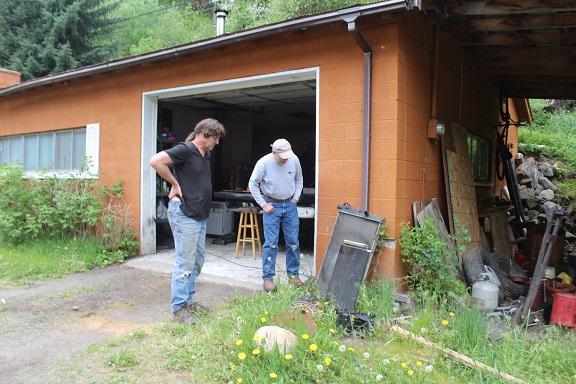
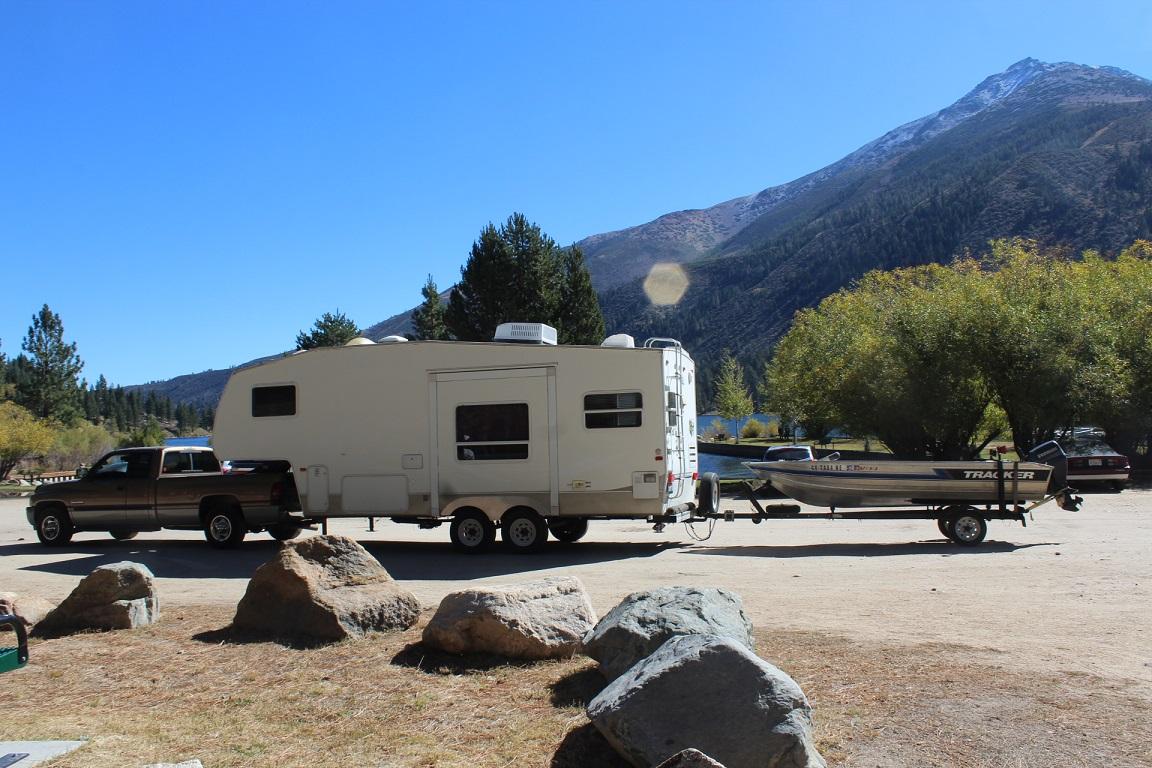
 YES, go to the Vendor Directory here on the site and find Auto Computer Specialist. They have a good reputation with good results.That sound like what happened to my truck August 21,2017. While pulling my 5th wheel heading north on highway 95 just outside of Riggens, ID. The engine died and coded P1689, injection pump gone bad. The 2000 truck had just over 88,000 miles at that time, it now has 133,000. I called @Mopar1973Man since he lives about 15 miles south of Riggins and told him what was going on. He told me what campground to take it to and ordered an injection pump from DAP. Four days later Mike and I installed it, and my wife and I were back on the road.I'm getting my truck ready for a summer vacation trip and the last time I had it out In February I noticed the AC duct temp was not as cold as other times. I checked the system with AC pressure gauges and had a digital thermometer for temp readings. Now with an outside air temp of 71°F The low side pressure reading was 35 PSI and a high side pressure of 225 PSI with a duct temp of 52°F at idle and 47°F at 1300 RPM. The 134A pressure chart says that at 70°F low pressure should be 35-40 PSI with a high pressure reading of 145-160 PSI. Seeing that the trucks low pressure was correct, albeit on the low end of the specification, the high side pressure was 65 PSI to much indicating a slight blockage or a poor operating orifice metering valve. With the truck's AC system being 25 year old it was time for some maintenance to get it up to peak operating performance. I replaced the high-pressure line from the condenser to the evaporator which comes with a new orifice tube in it. I also replaced the accumulator. I evacuated the system with a vacuum pump for 1 hour and then left it in a vacuum for a half hour to check for leaks with none found. The system was recharged with 2 pounds (32oz) of 134a and 2oz of PAG 46 oil for the replaced accumulator. The post repair test readings at idle were outside air temp 67°F, low side pressure 25 PSI, high side pressure 140, air duct temp 36°F. So, for maximum summertime cooling test the truck's AC system and repair as needed. Happing motoring, DanDo you know anyone you could swap tires and rims with to see if the problem moves to their truck?One thing about Harbor Freight tools is if it doesn't work well, you can bring it back. I brought back a MADDOX Clamshell-Style Strut Spring Compressor three weeks ago. I told the associate would not compress the strut spring on a Volvo XC90 far enough for safe removal and she refunded me the full purchase price.Yes, that is one of the VP44 death codes. Yes, you can't go wrong with Diesel Auto Power (DAP).When the modification was first done, I had a 5amp fuse in line. On one cold morning after the engine was first started, and the grid heaters active the fuse failed when the on-board air compressor was turned on. Since then, I have installed a 7.5amp fuse with no recurring problem.I've seen posts over the years where people have found the ground points mentioned above to be corroded.With wide open throttle the up shifts should occur @2800-3000 rpm. The transmission cable at the throttle bell crank is where you can adjust that. Was this doing a voltage drop test?These are the line pressure values of my Dynamic built Stage 2 transmission. I hope this helps. Line pressure test conducted with 300 psi gauge connected at rear servo test port (port #1) per FSM. @ idle (800 rpm), transmission in drive truck stopped- 85 psi. Light throttle: 2ed gear-105 psi. 3ed gear-110 psi. 4th gear-120 psi @ 2200rpm. Wide open throttle: 1-2 shift...180 psi @ 2800 rpm. 2-3 shift...175 psi @ 3100 rpm. 3-4 shift...150 psi. 100% throttle 4th gear TCC locked @70 mph 160psi.I think they are the same because in the 2001 FSM there is no G123 shown.The AC compressor clutch and the Cummins buss both share the common grounding point G107. See 2001 FSM page 8W-90-15 for its location.My truck's 3-4 upshift @ ~45mph with light throttle and stock 4:10 diff.I just saw this thread so sorry I didn't respond in time with pics. My thoughts about why it is out of adjustment, are the engine/transmission mounts in good shape or did they fail and let the engine move to the side and cause this problem.