Tractorman
Yearly Subscription
-
Joined
-
Last visited
Everything posted by Tractorman
-
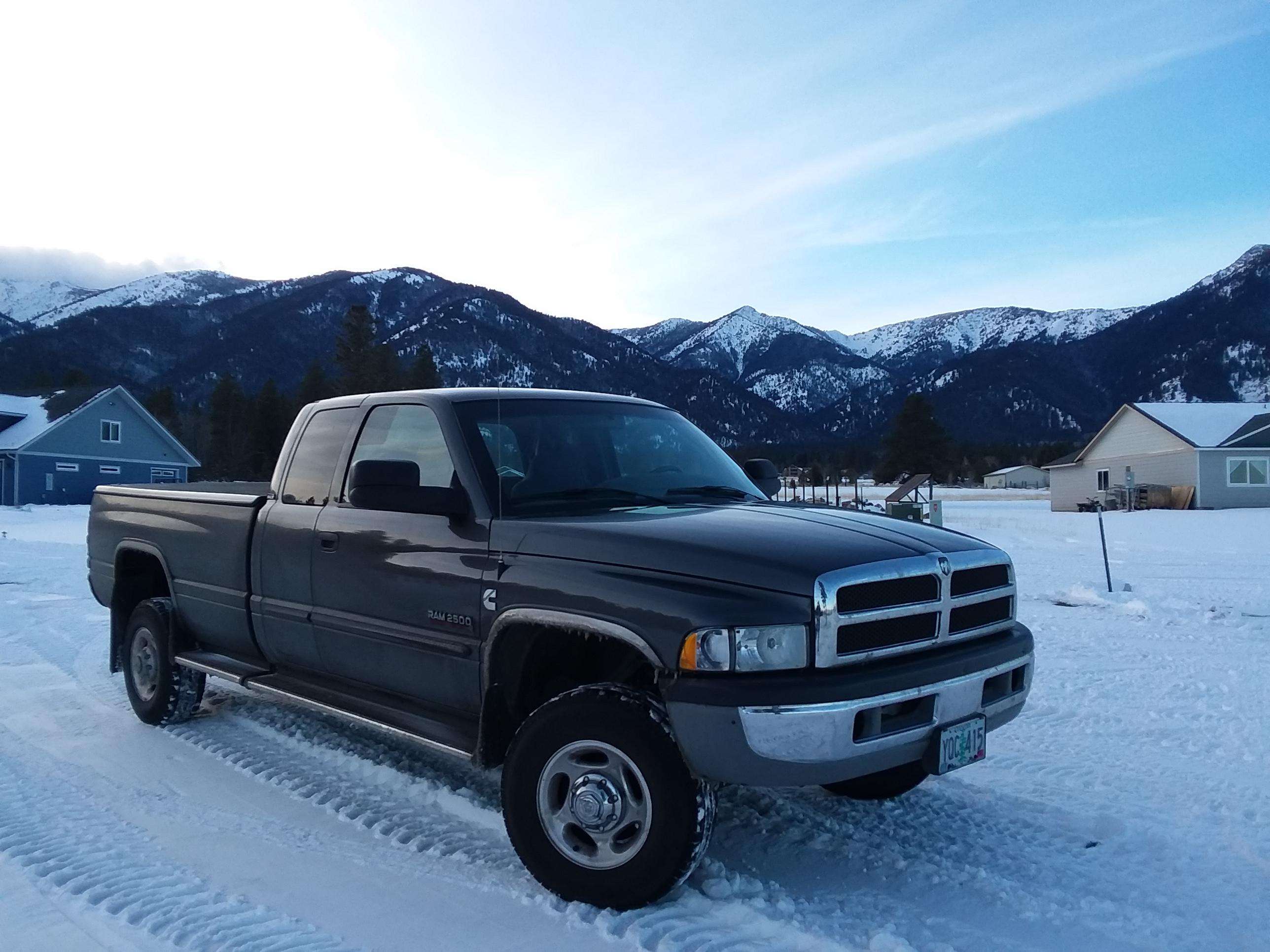
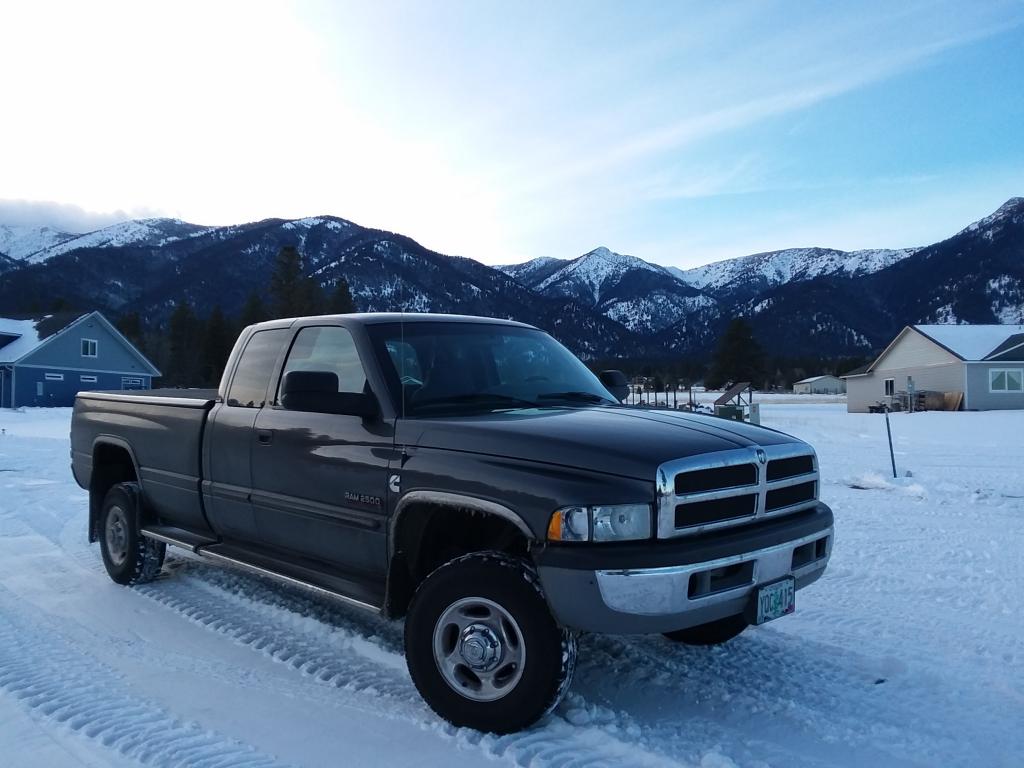
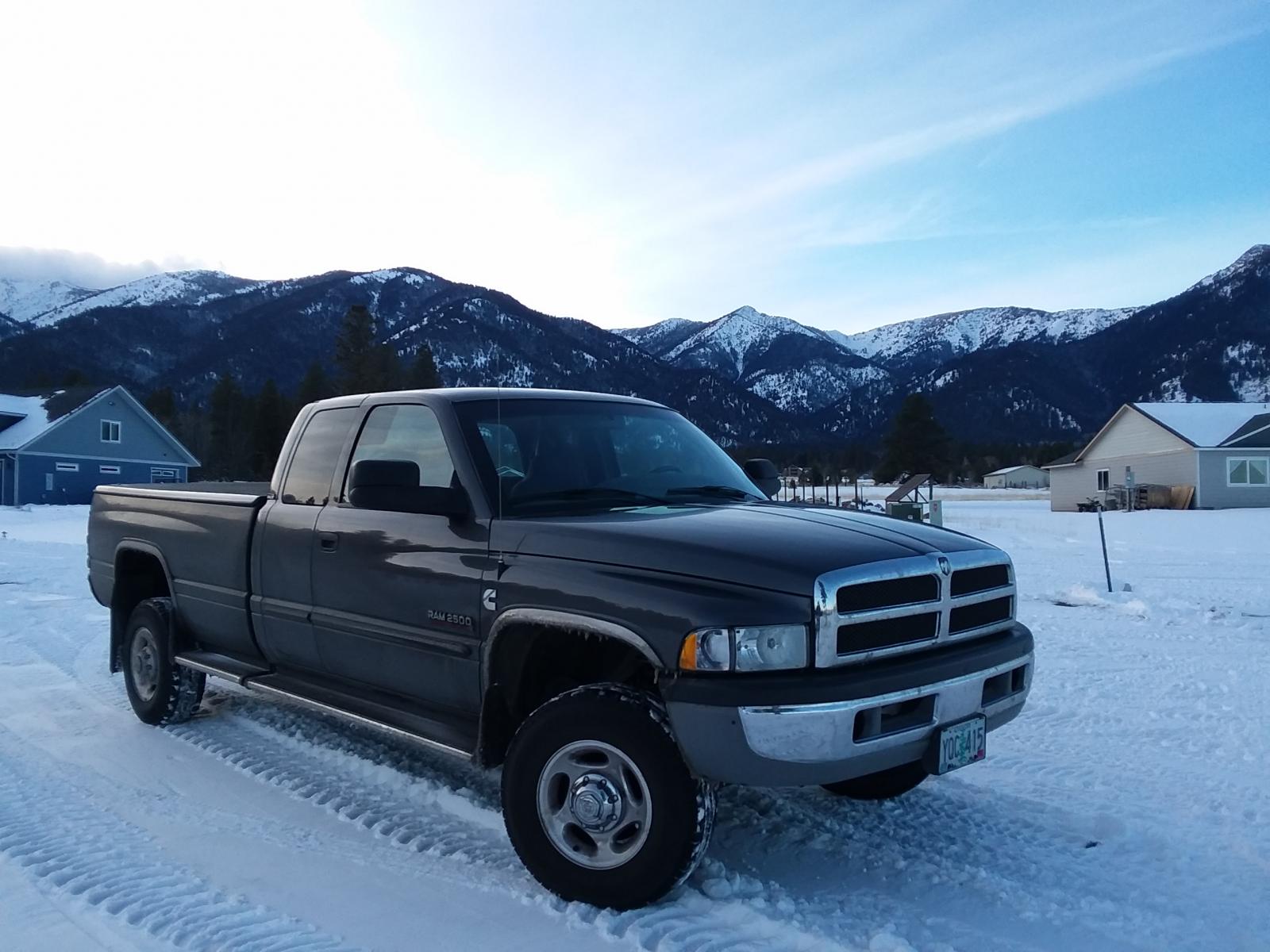
I am back home from the round trip to Baker City and back to Scotts Mills (near Salem). The truck weighed in at 8,100 lbs. I set the Smarty to the fuel economy program SW1 TM-6, T-default, D-default at the beginning of the trip. The tank was filled with B5 fuel and the first fuel stop was in John Day. The route used was Hwy 22 over Santiam Pass, through Sisters, then Hwy 26 through Prineville, John Day and onto Baker City. I spent three days driving around Baker City. Most of the 85 miles of highway between John Day and Baker City was snow packed. Also, three other passes west of John Day were snow packed. The first fuel stop was John Day (336 miles, 15.3 gallons netting 21.96 mpg with B5 fuel). I filled the tank with B20 fuel. The next fuel stop was John Day again (John Day to Baker City and back to John Day) (252 miles, 12.9 gallons, netting 19.53 mpg with B20 fuel). I filled the tank again with B20 fuel and I changed the Smarty settings to SW3 TM-6, T-3, D-2. The last fuel stop was at home. (301 miles, 13.2 gallons, netting 22.80 mpg with B20 fuel). There were several variables involved with this trip (two different Smarty settings, B20 and B5 fuel, snow packed roads, new RV275 injectors, 3,000 feet elevation change to and from, etc.), so I cannot say specifically what played into the miles per gallon recorded. Overall, I was pleased with the performance and fuel economy. Total: 889 miles, 41.4 gallons, averaging 21.47 mpg. The power was very good with both Smarty settings. The first setting (SW1 TM-6, T-default, D-default) had some timing rattle and throttle at low rpm’s surged a little. The second setting (SW3 TM-6, T-3, D-2) had less timing rattle and smoother throttle response at low rpm’s. It was easy to control smoke accelerating from low rpm’s, even at higher elevations with both Smarty settings. I attribute this to the new injectors. @pepsi71ocean, my original Smarty setting before I started my trip was SW3 TM-6, T-2, D-2. So, at John Day on my return trip I used that setting but bumped the timing from 2 to 3 as you recommended. I couldn't say that the turbo spooled differently, but the performance was good and still pulls hard down low and the timing rattle was not annoying. I think I will drive with this setting for awhile and then try the SW5 settings that you recommended. Thanks for your input. Also, the 245/75R16 tires performed well in the snow. Had to slip in a picture of the truck on at the property where we will be building near Baker City. - John
-
My decision was influenced by the Big Three in 1987. Ford and GM thought it was a good idea to put naturally aspirated V8 diesel engines in front of three and four speed transmissions in their pickup trucks in the early 80's. Let's see - crazily run up the engine rpm's to handle the few gears, pour out back smoke (especially at higher altitudes), and enjoy all the noise without getting the power or fuel economy of a diesel. I give credit to Dodge for not joining the foolishness. I really wanted a diesel engine because I knew what they were capable of. I was frustrated that there was not an in-line four or six cylinder turbocharged diesel engine available in a pickup by 1987 - it's not like it was rocket science. So, in 1987, when I found out that Cummins was offering a 50 state emission certified turbocharged 4 cylinder diesel engine (4BTA3.9) that was already made to fit in any Dodge, Ford, or GM pickup with a small block engine configuration, I ordered one. I ran that engine in two different 1/2 ton vehicles totaling just under 300,000 trouble free miles. At the time there was nothing like driving up Vail Pass in Colorado at 65 mph in overdrive with no smoke. If anyone would have known that they were just passed by a 3.9 liter four cylinder diesel engine, they would have just shook their head. When the time came, it was a no-brainer to buy my 2002 Dodge Cummins which I will continue to drive for years to come. - John
-
If I am driving on a 50 mph road such as you have described, my truck will always stay in 6th gear, even when I am towing. If I can easily accelerate (which I can), I see no reason to run a lower gear (with lots of engine noise) for such a light engine load. Remember, peak torque for a stock engine with the NV5600 is 505 lb/ft at 1600 rpm. I think that would leave you with an over abundance of torque to motor down a flat road in sixth gear at 50 mph. Just another opinion. - John
-
What caused the 30 amp fuse to blow? Is your truck back to starting normally now? - John
-
Others will be chiming in soon, but meanwhile no one can guess what you are driving, so please give some information about your truck. Do you have a service manual or an electrical diagram to work from? - John
-
This is why I didn't use a cable to control the CAD. Instead, I picked up a GM HVAC vacuum control unit from a wrecking yard for two dollars. I figured out which ports would work and I plugged the rest and I use that vacuum switch to lock just the front axle. Just rotate the knob one click and start moving the truck and the CAD locks in - reverse the procedure and the CAD unlocks. No fuss, and It's been operating that way since the truck was new. - John
-
I do have a stock clutch. I just replaced the original clutch with another stock clutch 7,000 miles ago at 297,000 on the odometer - the last 50,000 miles with the Smarty installed. I never had any issues with the clutch. The clutch disc, pressure plate, and flywheel were still in good condition when I replaced them. I just recently installed the RV275 injectors and I will continue to use the lower Smarty settings. Like you, I roll into the throttle until boost reaches about 10 psi, then I'm good to go. I rarely drive over 2100 rpms and I like the high torque delivered at the lower rpm's. Eventually, I will figure out a tune the stock clutch will handle and still give me good performance and good fuel economy. I do appreciate your comments. - John
-
The ratio works both ways, so either method is fine. If you were doing the test outside, you may not want to be laying under the truck in a puddle of water rotating the driveshaft. - John
-
I am curious as well, since I have the same setup. - John
-
@pepsi71ocean I drove the truck today on SW1 TM6, and with T and D at default. The truck runs strong and starts building boost quickly around 1300 rpm. I am going to runt this setting on my trip to Baker City on Monday. I will try a different setting for the return trip - maybe your recommended SW5 setting. Thanks for the reply, - John
-
Yes and no. In your example the following will be true: If you have limited slip, block the front tires, place transmission in neutral and raise both rear tires off of the ground. With both rear tires rotating together for one revolution, the driveshaft will rotate 3 1/2 revolutions. If you don't have limited slip, block the front tires, place transmission in neutral and raise one rear tire off of the ground. Rotate that tire two revolutions and the driveshaft will rotate 3 1/2 revolution. - John
-
I appreciate getting your attention with the Smarty SO3 settings. I agree that the information Smarty provides is anecdotal and it is also very limited. I have spent some time experimenting with different software settings and the settings within the software settings (torque management, timing, and duration) I gathered some good information from the Smarty S03 Can Bus Fueling thread. Some things that I have learned from that thread or on my own: * Torque Management (TM – 1 through 6) higher numbers mean increase of torque in the area from off-idle until turbo spools. * Timing (T – 1 through 4) higher numbers mean more advanced timing. * Duration (D – 1 through 5) higher numbers mean more fuel added. Other things I have learned: Regarding torque management, timing, and duration – “zero” is a default setting, but no one knows exactly where that fits in any given software setting (SW1 through SW9). In SW3 the full range of the TPS (0 -100%) is proportional to the actual position of the throttle through the full stroke of the throttle. Any software setting higher than SW3 reaches 100 % TPS as early as one half stroke of the throttle. A lower number for a torque management setting means less smoke accelerating from a stop while in the turbo lag area. If any of the above conclusions are incorrect, please let me know. With my original stock injectors I settled with SW5 – TM (5 or 6), T-1, and D-5. This combination seemed to work well empty or towing netting good power and good fuel economy. Now that I have installed the RV275 injectors I will have to do some trial and error testing. First, I set the Smarty back to stock so I could get a feel for the new injectors. Then, I picked the settings that I posted (TM-4, T-1, D-2) as a place to start. I picked a low timing number because I am being conservative, probably overly so. Also, timing rattle annoys me, but I can be okay with more advanced timing as long as performance is improved without risk of engine damage. I have since raised the TM to 6 for two reasons. One – with a manual transmission I prefer to have lots of torque available at low rpm’s during upshifts since almost all boost is lost during the shift. This is especially true getting the truck up to speed on a grade with a heavy load from a stop. Two – again with a manual transmission, I like the reliable control of the throttle to match engine rpm’s to road speed during shifts. So, for these two reasons I would rather use my right foot to control the smoke in the turbo lag region and to control throttle during shifts. @pepsi71ocean, back to your point regarding timing. How do I know how much is too much advanced timing? From what I understand, an engine under a load (towing for example) generates more heat (and pressure) in the cylinders and transfers less heat into the exhaust manifold at a more advanced timing, while an engine under the same load with a less advanced timing generates less heat (and pressure) in the cylinders and transfers more heat into the exhaust manifold. Please let me know if this is not true. Early next week I will be taking the truck to Baker City and back (about 700 miles round trip). The truck will be empty and am going to set the Smarty on SW1 with TM-6, T and D on default settings. I know this will have much more advanced timing than I was using and I will report back the results. Any input will be appreciated. Thank you, - John
-
@pepsi71ocean, I appreciate your observations. I will respond later when I have time to provide a thoughtful response. I do want your input. I continue to refer to the Smarty S03 thread in which you, @Me78569, @notlimah, and others provided a considerable amount of information regarding how the Smarty S03 operates. - John
-
Reading through this thread, I do not see any information describing your truck, so a lot has to be assumed. On my truck, the CAD unit (center axle disconnect) has to be actuated to turn on the 4x4 lamp. The switch for the 4x4 indicator lamp is located on the end of the external vacuum operated portion of the CAD unit. If the 4x4 indicator lamp operates properly (off and on when it should be), then a vacuum leak is not likely your problem because the rod that the vacuum motor operates is what contacts the 4x4 lamp switch. So, if the lamp lights when four wheel drive has been selected, then the vacuum motor has doen its job. Likely there is a damaged shift fork or collar inside the CAD unit on the front axle. - John
-
I have waited as you have both suggested and now there is no sign of fuel seepage on the injector line that was troubling me. I appreciate your tips. I am enjoying the RV275 injector performance. I definitely had to de-tune the Smarty, but I have found a setting that gives lots of torque on the low RPM end and the turbo spools quickly. I am sure that some of the improvement is just because the injectors are new. I have put on about 1200 miles, none towing - only one tank checked for fuel mileage and that was 19.5 mpg, so I'm not complaining. - John
-
Not quite, but headed there. I am the original owner. First VP44 got the P0216 code at 64,000 miles. I figured out how to drive around the limp mode for another year and 23,000 miles (to 87,000 miles) before the Dealer replaced the VP44 and did the in-tank lift pump conversion - all under warranty. I am at 305,000 miles on the truck now, so that makes about 218,000 miles on the second VP44 and still going strong. Interesting. We have the same year trucks with the six speed transmission. Just curious, did your VP44 have the timing piston failure, too? Did Dodge warranty your pump and do the in-tank lift pump conversion? - John
-
I'm glad you found your problem. I knew that there had to be a reason it was hard starting. I had a 4BTA in a 1/2 ton 1991 Ford F150 for over 200,000 miles when I lived in Leadville, Colorado. Elevation is 10,200 feet, so cylinder compression is much lower. Never used any starting aid until it got down to around 20 degrees. It is interesting that you mentioned an ether starting system. If it is installed correctly, it is an excellent starting aid. There should be a very small line going to a fitting on the central part of the intake plenum. Inside the plenum should be an atomizer that is sized for the engine displacement. The push button should only have power when the starter is engaged You can push the button as much as you want while the engine is cranking, but only a metered shot of ether is allowed each time you push and release the button. I had this system on my 4BTA engine. When I needed it at 20 below zero, it was so smooth it didn't even sound like an ether start. Hardly any ether is used because of the efficient way it is set up. One small screw-on bottle lasted me 1 1/2 years. - John
-
If you don't have a rigid sleeve inserted into the BHAF (something for the clamp to squeeze against), then BHAF clamp will always be loose because the clamp is compressing and deforming the material on the BHAF outlet. Dirt will likely enter here. I modified a short piece of exhaust pipe to just under 4 inches in diameter (and 7 inches long to reduce intake noise) to slip inside the BHAF. Dripley calls it the "BHAF muffler". - John
-
Understood. Thank you. - John
-
If you weld that bracket, it is crucial that it is in exactly the correct position or undue stress can be placed on the VP44 when it is tightened down. My truck is a pickup, not a van. I think Treed meant to write "cam" gear. - John
-
I will recommend to the owner to not use the programmer. Again, thank you for the detailed information, you have been most helpful. - John
-
I agree. There was no work done on the injector itself - the truck owner just replaced the solenoid, unfortunately, incorrectly, as in he didn't swap the ball and set screw from the defective solenoid. I have already recommended injector replacement with new Bosch units. I did a resistance check for the harness under the valve cover, but not the whole wiring harness from the ECM. I will do that, that way the connectors will be included. I would agree if the parts were exchanged in the high pressure part of the injector, however, they were in installed in the injector solenoid - this part only sees return line pressure. The ball and set screw were a perfect match. I am quite confident that this has corrected the fuel dilution problem since I witnessed the fuel coming out of the top of the solenoid while the engine was running before and without the ball and set screw installed. I think that there are two issues with this truck: * First issue: Cylinder #5 solenoid was defective (the codes and follow up resistance checks confirmed that) The owner installed a new Bosch solenoid, but without the ball and set screw in place. The engine cranked but did not start after the repairs. The next day the owner hooked up jumper cables and primed the fuel system with the bump start method and the engine fired right away and ran smoothly. Of course it was pouring return fuel out of the top of the solenoid, but the owner did not know that. The truck was driven a couple of days around town for about 15 miles. At this point the owner informed me of the high and diluted engine oil level. I instructed to not start the truck and I went to his house. This is when I witnessed the fuel coming from the top on the #5 injector solenoid. So, I corrected this problem and the engine has not started and ran smoothly since, but I know the fuel leak has been corrected. * Second issue: I have been puzzled as to why the engine didn't start and run right away after the #5 injector solenoid was replaced (without the ball and set screw). And when it did start the next day, why did it start many times and operate smoothly for the next 15 miles even though fuel was unknowingly leaking out of the top of the solenoid? And now with the missing ball and set screw put back into the injector solenoid, the engine does not even fire at all. Then after several cranking intervals the engine does attempt to start and barely run and you can tell that only one cylinder is trying to carry the whole load, and that cylinder is detonating as if it has extremely advanced timing, meanwhile heavy white smoke is coming out of the tailpipe. This is where I am thinking that there has always been an injector leaking fuel into a cylinder, even before the original problem occurred. My thoughts are that one leaking injector is pulling down rail pressure so no injectors will fire. Then after several cranking attempts, enough fuel is collected in the cylinder with the leaking injector and that cylinder fires prematurely and attempts to run the engine on its own (not with injected fuel, but leaking fuel). Just my theory. I will get the tool 04Mach1 recommends and I will get a tool to read rail pressure to see if I can find out which is the problem injector. The engine oil and filter has been changed and the truck has not been started yet. When we do get it to start, the oil and filter will be changed again within a few minutes. The name of the programmer is Ag Diesel Solutions model 20100, not familiar with that programmer. It is currently disconnected. Thank you very much for your detailed response. Your information is greatly appreciated as well as others. - John
-
Thank you. You are a star. This is the answer I was looking for. This tool should help me find the correct failing injector. I placed my original post on the TDR site as well, but the Mopar1973Man site wins! I will be recommending to the owner to replace all injectors with new Bosch units. But, for now at least he can start with replacing one or two as necessary to get the engine to run.. Thank you again, - John
-
The source of the fuel leak was the missing ball and set screw in the injector solenoid. That was fixed with a new ball and set screw. The engine oil and filter has been changed. I cannot do any tests that require the engine to be running. I don't believe any of the injectors are firing. I think that one cylinder has a continuous fuel leak from an injector and when enough fuel collects in that cylinder, the engine ignites that fuel and causes the harsh detonation and the ability to barely idle with lots of white smoke. To me it would make sense that a leaking injector could pull down the rail pressure enough so no injectors would fire. Does anyone agree? disagree? Am I crazy? If anyone agrees, than is there anything I can do to figure out which injector is leaking fuel? The engine is a 5.9 - I am sorry about not making that clear. - John
-
Great - glad you like it. I noticed that the switch you ordered is waterproof. I have a windshield on my truck, so I don't need waterproof switches inside. Actually the switch you ordered is a good looking switch with the illumination around the push button. I am jealous. - John