
Mopar1973Man
Owner
-
Joined
-
Last visited
Everything posted by Mopar1973Man
-
Here is the engine stuff... http://mopar.mopar1973man.com/cummins/2ndgen24v/wiring/wiring.htm
-
Well... sorry I stir the pot in the wrong way... Like Myself I tried the switch idea but just play with the idea... I did find out it was adverse effects like retarded timing, low power, lowered MPG's. but it did learn a few things from the switch on functions of the engine (not the place to high jack a thread). But I'm going to assume the owner is smart and isn't fogging out neighborhood. As for me I found that once people found the smoke switch in your truck they teasted you to death because you didn't have enough ball to actually smoke and you had use a smoke switch to build smoke... So it comes right back to reality... If you want smoke built for power and smoke will come... I've no longer got a smoke switch... But with a Edge Comp on 5x5 and RV275 injectors and a heavy foot I can darken the highway. But relizing I'm after MPG's I normally rather clean looking... Sorry Dually for upsetting the crowd... I figure he would learn how to do it somehere sooner or later but I knew people like yourself would steer him away from it...
-
Geez...
-
It should be the signal lead from the MAP sensor NOT the ECM. Then btidge the the +5V to the signal to the MAP sensor. When testing the wire with the key on you should see +5V on both signal and +5V leads at the MAP sensor. Your Quadzilla should show MAX boost on the gauge if wired right... Just remember not you use this in public...
-
When you start see YouTube videos of blacks trying to get BO out of office you know BO screwed up and has a slim chance of making it back in...
-
Well the fact is you won't have to change air filter for about 6-7 years... Never got to wash it, never got to oil it, etc... Just stick it in the rubber neck of the elbow and tighten up... Like myself I created a heat shield for mine. Then tied it down with a bungee cord. Then beefed up the neck with a piece of 4" exhaust tubing. Then top that all off by stuff the stock filter minder in the head of it... My first filter cost me $58 buck at a local part store. Then I bought a BHAF replacement from Eric at Vulcan Performance. As of right now that new filter is still sitting behind my desk in the box 1 year later waiting for the first filter to start pulling the disc down in the filter minder... But to give you an idea.. I've still got factory brake pads yet after 162K miles... I figure my first brake job will be at 200K miles... (Thanks to Mr. Exhaust Brake) There is a lot of things that you can add to your truck to extend the life of everything!
-
Dang... Good ideas Russ... But you should come to Idaho there isn't a bit of snow here right now... As a matter of fact Mom and myself were out back clearing the hillside of old brush and debris....
-
doesn't AMSOil suggest half as much 2 cycle per dose? So if the engine normal takes 40:1 with petroluem arn't you suppose to reduce to 80:1 ratio with AMSOil???
-
Glad to hear you got it back on the road... Interresting to find there was a ground issue in the wiring...
-
I would check for error codes first and check the trans relay...
-
Oh man you got me droolin' now...
-
Here Here! Back down to the word "respect" again...
-
Well the radiator is for sure needing cleaning... But as for the power steering I would think its a vacuum pump seal more than a power steering pump problem...
-
Would this work for ya??? http://mopar.mopar1973man.com/personal/2002/crankcase-vent/crankcase-vent.htm
-
Ok... Little more insite on this... If the P0500 is by itself it nothing to worry about most likely wheel spin... But if the P0500 is with a ABS/BRAKE light I would start looking are ABS wheel sensors... If the speedometer is working properly then I would replace the front sensors... If the speedometer is NOT working properly then the rear speed sensor has failed...
-
I got one all the time... (Seriously!) Dirt roads get me all the time... http://mopar.mopar1973man.com/cummins/2ndgen24v/abs/abs.htm (Bottom of the page) P0500 Error Code - Explained Since 4 wheel antilock brakes rely on 2 front axle sensors and 1 rear wheel sensor. The CAB is watching the speed output from all 3 sensors at one time. So when on a slick surface like ice, gravel, wet pavement, etc. when you accelerate rapidly and cause the rear tires to spin the rear speed sensor jumps up in speed rapidly and the front 2 sensor could be at zero speed yet. So the CAB can't understand how the rear half of the truck is doing say 35 MPH and the front half is doing 0 MPH. POOF! P0500 code is thrown.
-
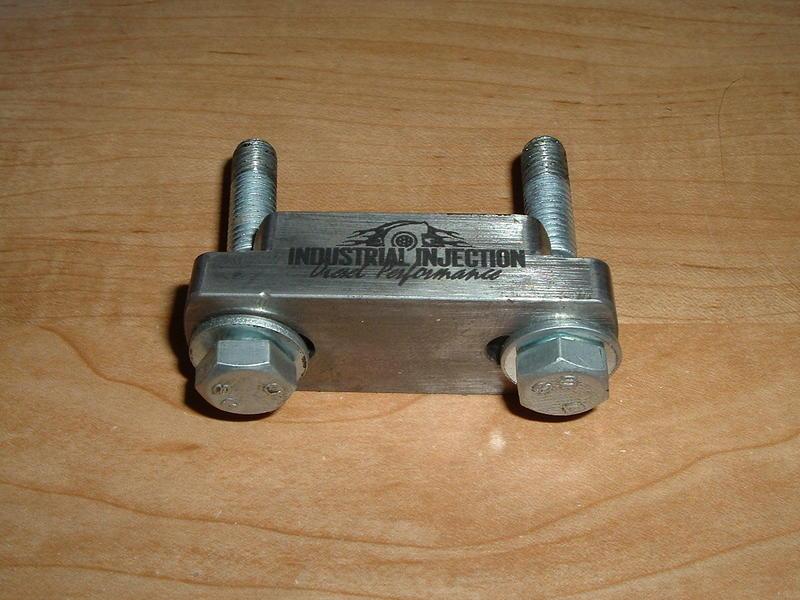
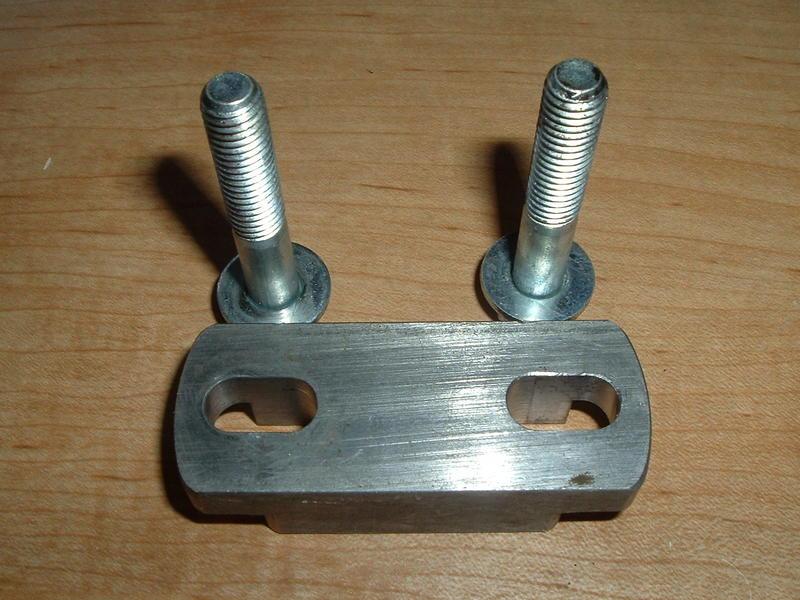
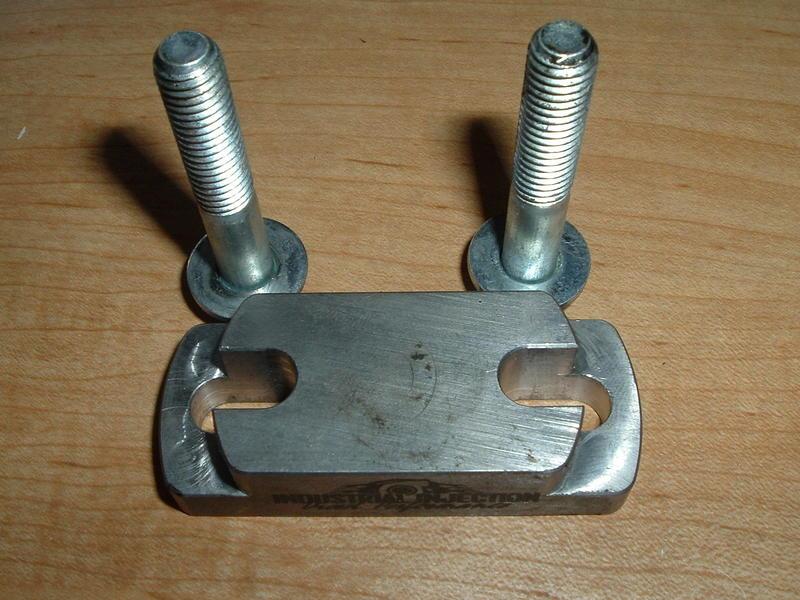
Just so everyone knows what a VP44 puller looks like... (I know you asked about in a PM) Even works on 12V trucks too... Later on I'll go get my homemade puller out... (Redneck engineneering)
-
Any updates to the project???
-
I guess I going to have to alter the forum heading... But yes all gasser info here...
-
Like this... I pulled the loop down while bleeding...
-
There is air in the system yet... The bad part is there is a loop above the resevoir and the air bubbles float into that loop and don't come out easy... Thats why it got to be done removed from the vehicle...
-
Don't try to disconnect the battery ot clear it won't work... Seriously if there is still a issues then the light will remain on. But if you corrected it will got out in just a few hundred feet of travel... Remember all the sensor must match speed for it to be happy. So if 1 sensor is lower or higher than the others then the ABS/BRAKE light is tripped.
-
What to do you mean by loose?
-
The only thing I could figure is using a soy based (or non-toxic) lubricant which doesn't require MSDS entry... That the only thing I could figure...
-
It true that ATF+4 is better fluid over the older +3 version. If you look around the +3 is still available in most stores. Matter of fact I've got 10 gallons of ATF+3 sitting in the garage in 5 gallon buckets... (Transfer case on my truck and A/T on mom's truck)