
Mopar1973Man
Owner
-
Joined
-
Last visited
Everything posted by Mopar1973Man
-
I told you @Dynamic is the man when it comes to automatic transmissions.
-
Point taken...
-
Mine is pretty simple really. The reverse light relay is hung in the driver side taillight area. My power comes from the +12V trailer lead. Then my toggle switch just bridges the stock reverse switch. So in trying to keep it simple mode. I do like @IBMobile idea of tapping the PDC idea very handy idea. Personally I'm wanting to re-do some of my wiring on the overhead console anyways.
-
Over the years I've custom made most of my custom pins out of paper clips and bailing wire. Yes it much better to use a proper pinnig device than forcing the wrong size pin into a socket.
-
...and don't think of it as spending $100 on just digital volt meter. Think of it as buying another quality tool for your toolbox for keeping your vehicle repaired.
-
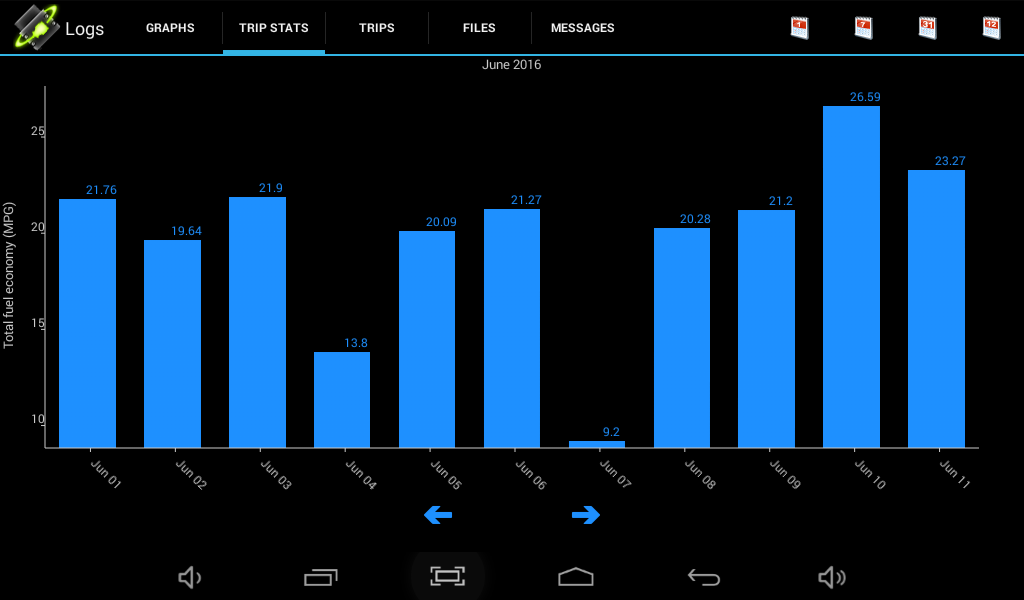
Might want to look at my pass fuel logs... I just had to see if I could still do it. Yea... I can smack a 26.59 MPG for the day... Again the higher number are always going to show more so at lower speeds. Like all my 20-21 MPG are all running speed limit.
-
Old age has me scratching my head... I don't remember one as far as I know.
-
Do I hear a new product for sale in the store. Hmmm....????
-
That is all vacuum pump seals then...
-
That's just a size or two bigger than the one I worked on last. IIRC the last one was like 26 HP but a 3 cylinder Kobota tractor. All I can say it was sure a project getting the front load and all the stuff off to split the engine from the transmission. Once your get the engine out there isn't much to them. It sure amazing what those little tractors can do.
-
True... Way easier to replace the entire unit. Hard to see there is a large o-ring below my thumb.
-
I just bridged the plug on the reverse switch. So either its automatically lit when I shift to reverse or manual I can flip it on and hitch up trailers or what ever in the rear of the truck.
-
I just got called out yesterday morning at 7am for truck that died alone the highway. Come to find out the truck has problem or issues pulling fuel the tank. The fuel gauge is correct but is running out of fuel at around 3/8 to 1/2 tank of fuel. So watch this time around for when it at up based on level. Yeah the owner fill thee tank and it only took 20 gallons so the gauge was correct but the factory pickup is got an issue.
-
Reservoir on the pump is sealed by an o-ring. Look at the front side of the pump and see if its leaking from the o-ring.
-
Put the fitting on the shop floor and using your body weight to push the hose over the push lock fitting. I normally remove the full length of line to push in the push lock fittings. Impossible to do on the vehicle.
-
A good DVM should be able to read AC volts in the millivolt range. Then should be able to read across variable frequencies. Lot of cheap DVM's only can read 110 VAC and 220 VAC at 60 Hz. So when you attempt to use one of these you end up with numbers in the 29-31 Volt AC range which is no where near correct. I tend to favor Fluke but there is many of quality name brand digital volt meters out there.
-
Once the alternator is removed which isn't hard. Just grab a phillips screwdriver and take a few screws out and replace. Changing diodes on the road side is nothing. Even changing the brush pack is easy too its only 3 screws. So that being said just need a source of quality diodes being that is about the only thing there is a problem with. Brushes are cheap at LarryB but the diodes are nearly the price of an re-man'ed alternator. http://www.fostertruck.com/diode-pack-rectifier-bridge-for-dodge-denso-alternator.html http://www.fostertruck.com/brushes-for-dodge-denso-alternator.html
-
So the quick connect failed. Yes, your going to have to replace those two fittings.
-
Grab your DVM and start testing...
-
Vacuum pump rebuild is only $13 buck for the seal kit. That should stop you from buying injectors.
-
Reason why I won't upgrade... I still enjoy the huge stopping power of my exhaust brake.
-
Bingo... This man has it nailed down. Like myself I'm a exhaust brake owner I clear over 180k miles on a set of brake pads. There is no reason why you would have to upgrade or modify existing service brakes if use in combination with exhaust brake. Now of course a diesel vehicle without a jake or exhaust brake is just asking for high wear patterns of brake pads being the diesel engines have very low resistance during deceleration. With me living in the mountain of Idaho and hauling trailer loads of firewood and my RV still to this day I rare touch the service brakes unless I'm stopping. All the slowing down is done with a combination of gearing down and letting the exhaust brake hold me back. So my service brake remain cool and don't normally get used till speeds under 25 MPH. so at this point looking at at least local laws compression or jake brake use is illegal to be used in city limits. So that being said what is the average city speed limit 25-35 MPH. Even for OTR truck this is rather light duty for stopping and can be easily stopped using either disc or drums. I read an article a while back stating that drum brake are more efficient for stopping power but more prone to heat issues and water issues. Where disc brake tolerate heat better than drum and shed water better.
-
According to Quadzilla stock programming it can already access full advancement. It just a matter of when... According to the information they provided me if you call for advancement too fast it will cause the VP44 to ignore the value. Hence part of the 65 HP limit. As for flashing the PSG unit it can be done on a Bosch 815 test stand but it take 3 hours of testing to produce the information for flashing.
-
The bleed screw editions of hydros tend to be really fun and easy to screw up. Being the reservoir is only a few ounces of fluid and you trying to push air downhill hill while the air attempting to rise up hill. Just easier to remove remove it and push the air up hill. The master / reservoir doesn't have the volume like the brake system for bleeding. Like Chevy truck of got this and it still a fight to clear the system of air because again pushing air downhill while it attempting to rise.
-
ECM would have to reflashed there is changes in software regarding throttling and launching. Auto's don't have the anti-stall feature of a manual ECM. PCM has to be reflashed because of the hunting for all the governor pressure sensor, governor solenoid, and other electrical features of the automatic which would create issues. There is no neutral safety switch on a manual. the only wires going to the transmission is reverse switch for lighting. There is several things are different wiring wise depending on model year cruise control is fly by wire vs vacuum driven, clutch safety should be a jump wire but not certain all years have the plug. Like on the automatics will require a safety jumper as well if the option is present. Then the reason I suggest change of harness I know the automatic wiring will just be hanging around it would much cleaner to have the proper wiring and not ahack job. with zip-tied wires everywhere.