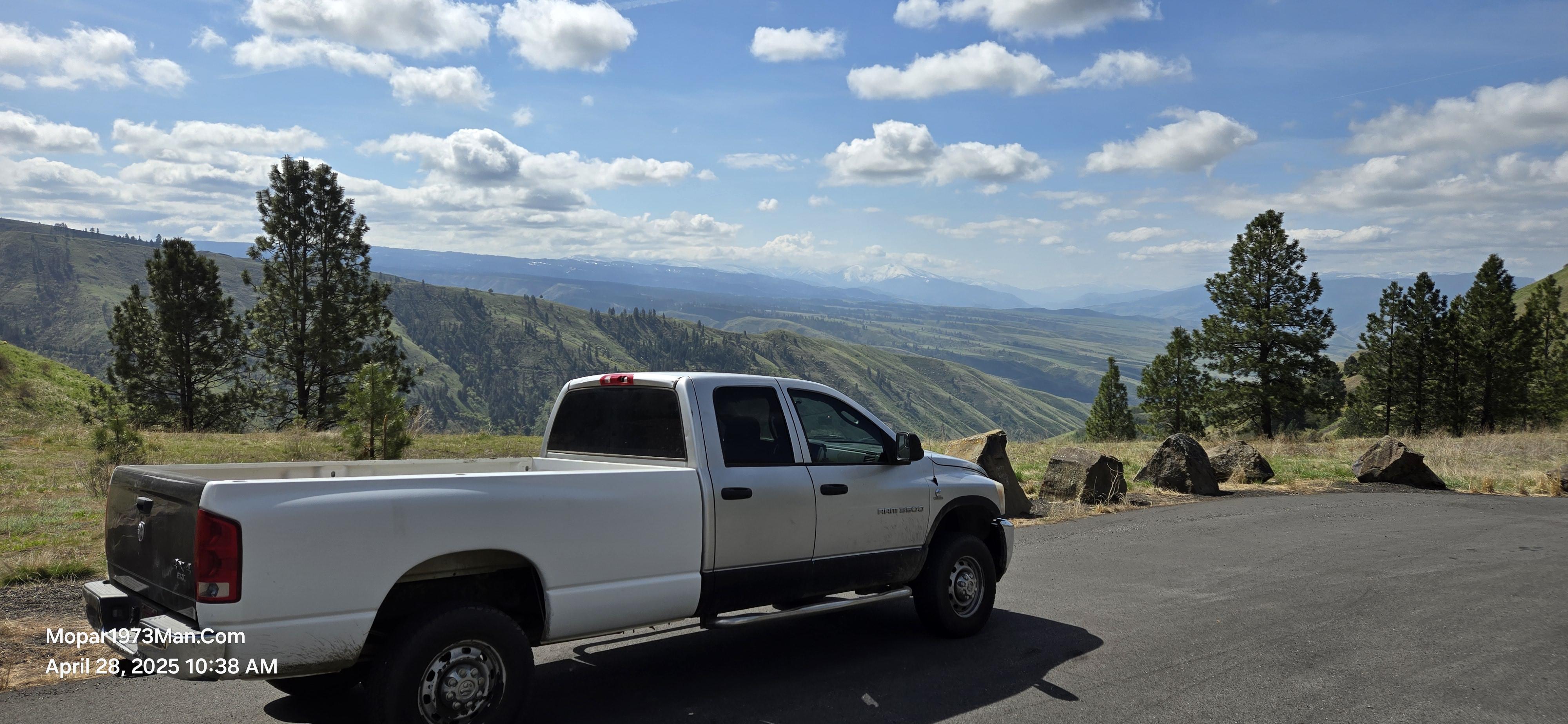

Mopar1973Man
Owner
-
Joined
-
Last visited
Everything posted by Mopar1973Man
-
It will defuel typically before it throws the code. It will throw the code if it can't control the boost with defuling alone. P0234 code should pop if so. Like I said it will defuel before it throws the code.
-
If you got to crack an injector line yet you still chasing a air leak issue. You might have to prime every thing up and pressureize the fuel tank with compressed air and see if anything leaks.
-
Going into a more permanent solution would be to build a pole barn over the RV to keep blowing wind and snow off the roof. This will improve the ability of heating the RV as well. You could insulate the pole barn again with square hay bails. Then you have better access around the RV also if you want to take the RV some where you can just open the barn doors and pull it out. Bad part of enclosed barn is it might make you stir crazy not seeing daylight or outside. Some folks don't have a problem with this and other can't stand the idea...
-
If the RV is not being moved then I would level it all out and then stack hay bails all the way around the RV. This will insulate the under side then. Now you can plug in a heat lamp in the area near the holding tank to keep them from freezing. A common method of RV owners here in the area. I've seen some do foam panels, hay bails, wood panels, vinyl skirts, etc. Hay bail is going to provide the best insulating factor. Now if all the hook up are under the RV the chances of freeze up are pretty low. The hay bail method tend to hold up well even with -20 to -30*F weather. Just the propane and electric bills are high for RV at those temperatures.
-
Some how I would be looking for a good machinist to create a but repair. The fact of always removing the intake horn all the time the last thing I would want to do is constant fight with a specialty nut to hold the air horn on. I would see if any one would have the ability of repair for this.
-
Man that knows...
-
This is way the whole boost fooler idea is not commonly used. Most people get a fuel bo of some sort to add back the fuel map above the stock limits. Even with my Edge Comp missing and my boost elbow set for 35 PSI it will fuel all the way to 22-23 PSI on just the ECM. Top end power is rather weaker but it does not trip a P0234 code.
-
If there is a boost elbow present you need some form of boost fooler. That being said it will prevent the code and it defueling but it will not extend the fuel map any farther. Power beyond here will be rather flat. Basically from 18 PSI and above the ECM will continue to use 18 PSI boost data for fueling.
-
You might want to get a fan pulley tool. Fairly cheap at a NAPA store I bought one for $18 IIRC... Basically hooks the pulley bolt giving you a way of hold it from turning without damaging the pulley. As for the -10*F difference in IAT make little to no difference really. Might for racing where EGT have to stay in check but for daily driver there isn't enough to worry about. Being the green band is most optimal for 24V MPG wise. I'm not sweating it at all.
-
This is Idaho's weak way of covering over 10 miles of sin. The road is still lumpy and rough. Ugh....
-
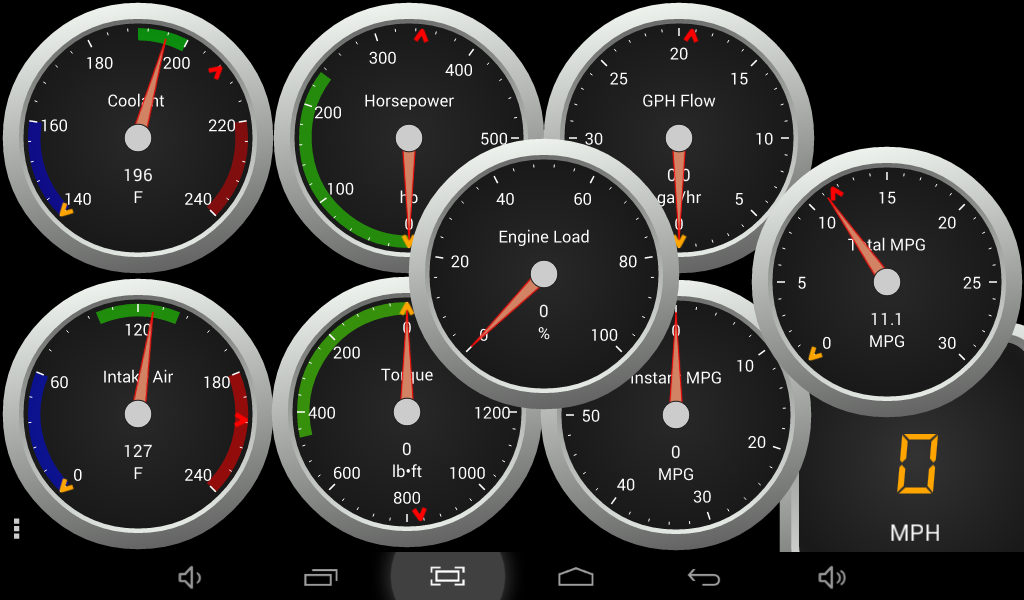
Take note of my high mark on the coolant. That is where the fan locked fully and sounded like a turbo prop. As for the IAT I'm sure some are going to comment on that high mark. That is what happens when you exhaust braking for miles in 4th gear. As for normal driving the needle typically sits right in the green band for IAT. Also no MPG fooler was used also not required. Weather during this was 87*F outside and mild breeze. Edge Comp on 1x3 just for fun too. Fun part of the IAT subtract 40 from that number your match my outside temperature... 87*F. I'll admit also I was towing faster than I normally do just to get some test data from high speed towing. All I can say I don't see any benefits to towing at high rate of speed.
-
For me out here in Central Idaho I've got to put up with this chip coating that doesn't help the life span of any tire. I don't care what the tire made out of or who manufactured the tire, it's still going to wear out much faster running on this kind of road surface. Idaho just chip coated 10 miles of road north of New Meadows, ID and now doing more chip coating south of Cambridge, ID as of today.
-
Picky... Geez...
-
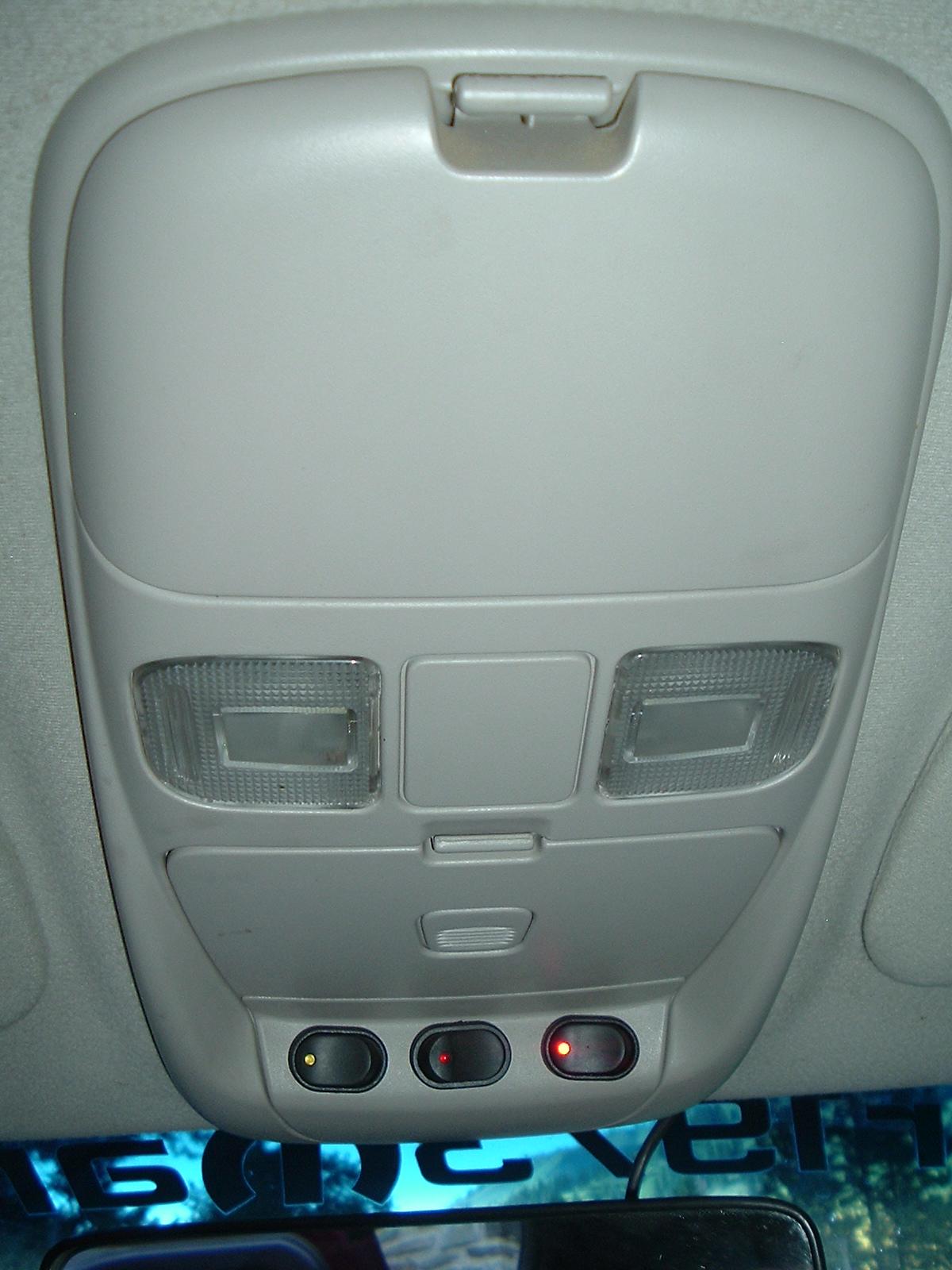
Another solution for reverse light switch location.... Left - Fog lamp switch Center - Back up or rear flood lights Right - Emergency red flashing light
-
Curious... How big of an RV? Also curious of how good the heat spread will be. I know with pure length of my RV if I use portable heater in the main living area the bedroom and bathroom are cooler heat doesn't travel well without a blower. Just helpful feedback.
-
Be careful of what you thunk is locked. It should sound like turbo prop throttled up going down the runway. Partially locked will turn the fan but not at full force.
-
I should replace mine being it's age but it continues to function well. The probes are hacked from another meter. I replaced the battery 3 times now and blown plenty of fuses.
-
I've still got my fan forced furnace in the RV. As a matter fact just boondocked again last night. Solar panels to keep the batteries charged up. I've also used big buddy heaters too. They work very well for heating an RV, house, or shop. Never had dime issue with the big buddy.
-
Normally my fan is locked by about 205 to 208*F. So if its rising more double check the thermostatic cool for oil leaking or packed with dust. This will impact clutch performance. If leaking oil it needs to be replaced.
-
I agree with Ah64id I normally see 215*F or so depending how hard I'm pushing it. As long as your in then normal range which the high mark is about 225*F IIRC
-
Blackberries, raspberries, cherry, apples, pears, plums, thimble berries, etc.
-
One small problem I'm having with the cup holder idea. I've got a Dobbie that likes lay across the console. I can't deprive Diesel of his favorite spot.
-
Yes, you have to swap studs from the old to the new pump. No, sealants used. If it was me I'd grab a o-ring from my A/C kit and use it. I've got fairly good selection of o-ring.
-
Good suggestion... It might of been trip during the repriming event. I would clear the code go for 5 to 10 mile ride and check again.
-
As for my Fluke I bought back in1988 when I went to ITT Tech for electronics and computers. Still a great meter still accurate.