
Mopar1973Man
Owner
-
Joined
-
Last visited
Everything posted by Mopar1973Man
-
As for stashing a Quadzilla that is so simple. Since there is no display in the cab no one would know it was there. Now for the module and hook up hook up the same just hide your wiring with factory stuff. Hide the module like inside the fender skins I'm pretty sure there is a enough reach.
-
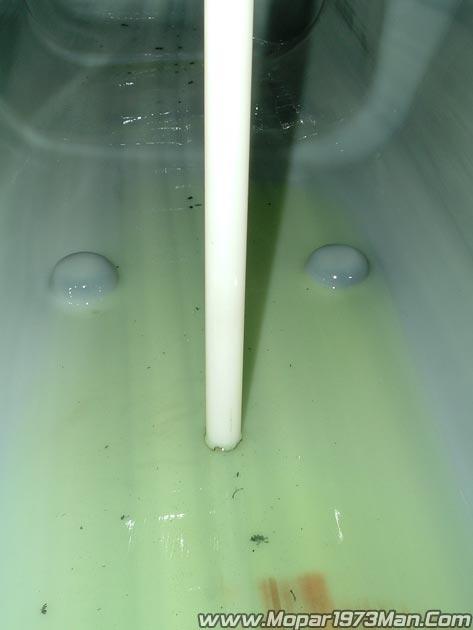
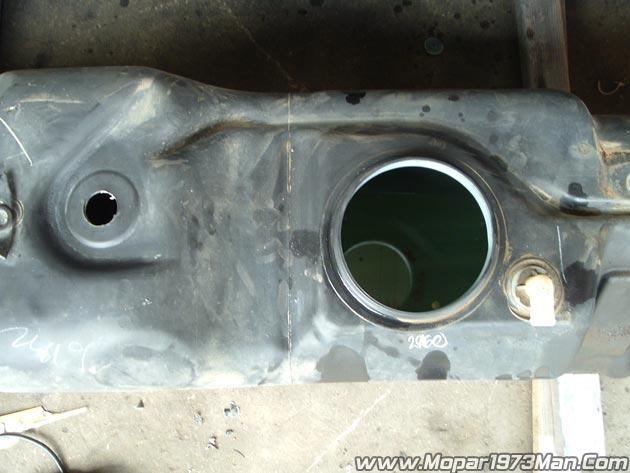
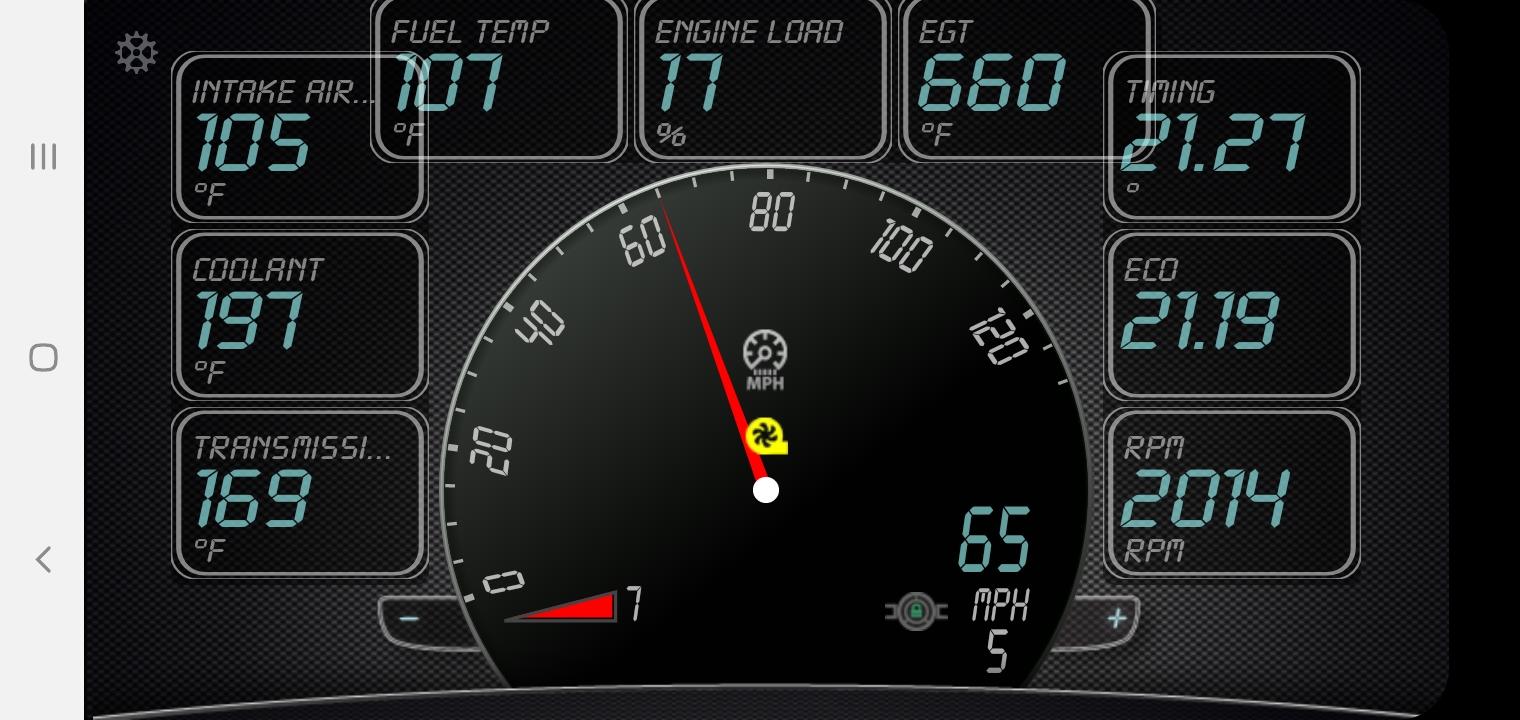
Me personally I'd never put the straw in the sender. Being now your dumping hot 170-180*F fuel from the return of the head returning from the injectors. Like my truck the Fuel Temp and IAT run as a pair. I'm never over 130*F in the summer and no heat soak of the VP44 always goes down after the engine shuts down not up. Like yesterday being I draw from the fuel tank directly I was a mere 90 to 110*F fuel temps for the day and never return even close to the draw straw. All fuel is return away from the suction straw. This way I've got much colder fuel for the VP44 to cooled with. Been running this system since 2006 and never was a disappointment. No 1/4 sloosh issues No high fuel temp issues. Can empty tank to the EMPTY mark safely Much cooler fuel temps Stable fuel pressures As seen here IAT and Fuel Temp chase each other. NOTE: Transmission temp is actually engine oil temperature. Note my location which is away from the sender basket with hot fuel. Then note my straw nearly touches the bottom of the tank...
-
Cranking I see bouncing 7 to 12 PSI. Running I see 17 at idle and 15 at WOT. I'm nowhere near 20 PSI or plus pressures. I'm very close to the stock pressure with good supply volume and plumbing since I only drop maybe a total of 2 to 3 PSI depending on filters how clean they are. The cranking pressure is a 50% duty cycle the ECM controls and it shoulbe lower than 12 PSI for proper starting above 12 PSI it becomes hard starting being the timing piston is being pushed advanced with fuel pressure. Hence why you need 7 to 12 PSI for cranking. Way too many worry about the 14 PSI MIN pressure but the truth is you don't need 20+ PSI either. You nee to look at the cranking pressure as the engine is trying to start and lower the pressure to 7 to 12 bouncing PSI. 422k miles never had a hard start hot ever...
-
Rear axle speed sensor typically will see as a goofy speedometer that doesn't work right all the time. Like get below 30 MPH and drops to 0 or something odd. That is a failed sensor. Now the front to sensors if you suspect the front replace in pairs.
-
Myth.. I quit cleaning the sensor and just check the sensor again the ECT at start up if matching the sensor is working. Below 80*F there is about 3* to 4* advancement of timing. Warming the IAT the better for MPG's. No need for cleaning or replacement unless the temperature is way off. Typically I see about +40*F over outside air. Then IAT and Fuel Temp typically run as a match pair. I'm still running my OEM IAT it has not been clean in hundreds of thousands of miles but the temperature is dead one the money.
-
Like I said the front two tower bolt were not tight so when I pulled down to 4th I pull the shift rod right out of the gate. If the tower was tight it might not have happened. Being I normally just stay in 5th for most highway driving. Remember 55 MPH is about 2,200 RPMs in 4th. Again normal just stay in 5th.
-
Yup. It finally happened to me. Dropped from 5th to 4th rolled up my power tried to shift to 5th again... NOPE so I'm stuck in 4th limped into Hoots Cafe in Whitebird, ID. Im glad my sockets with me. Quickly pulled the cup holder up. The the boots. Then the shift tower. Everything was good just jumped out of the gate. Push the center fork back to neutral. Reassembled. Took 20 minutes with basic tools. Now in Grangeville ID getting breakfast.
-
I get what he's talking about like some times you'll see little depressions in the rubber outer jacket and then some how the inner jacket splits and the oil would weep from the depressions of the outer jacket. I've not seen that but I see how it would be possible. As for my oil leaks so far a couple of running around day here doing typical things going to work, going to the dump, etc. So far not leaking. I'm going to head to Lewiston for grocery shopping and restock for the month. I'm going to pick up a gallon of Zep Degreaser concentrate. Then I'll spray it directly to the engine bottom and clean this mess up with the power washer. Just be aware the Zep degreaser is an acid so don't leave on aluminum for long periods. I'm pretty sure Home Depot has there own brand of it too. https://www.homedepot.com/p/ZEP-1-Gal-Industrial-Purple-Degreaser-ZU0856128/100047759
-
Give DAP a call they have rebuilt kits for turbos. Once rebuilt it will be all new again. You could upgrade to 62/68/12 they have them as well DAP for a good price. Works with factory exhaust brake too.
-
3.73 would be just about right for most people with slide in camper or tow a lot. For me its all the steep mountain roads.
-
And... What happened?
-
Like this dual disc Valair started out with being grabby and shake the crap out the truck. I start launching in 1st gear and solved most of the problem but the reverse was bad trying to push trailers up a slight hill and have the clutch bucking and jump. After a about a year it started to fade out and quit. Now it smooth as glass forward or reverse. Last time I pulled the transmission out for failed syncro Weller truck (Abe) wanted me to pull the clutch and inspect. Which I did. The clutch was fine both friction disc no issues. The metal surfaces pressure plate was fine no hot spots, the center disc was fine on both sides now hot spots, then the flywheel was the same way with no hot spots. Reinstall everything and its still smooth. Still to this day no traction bars.
-
Actually I think I got it. Between the front cover might of been weeping around the edge. Then the vacuum pump bolts were totally loose on the bottom. The only bad thing that happened I destroyed the installing sleeve on my front crank seal. Kept trying and trying till I split the install sleeve. Bought a second crank seal got it in the front cover no problem. Bolted down carefully pulled the sleeve out. Then re-installed the sleeve in the other new seal. Now I've got an extra seal again. As for the other bolts in the gear case you can seethe top most but nearly insane to try to spot the other 3 Allen bolts under the can gear. I need to power wash it down again and see what is leaking again. Next one is to figure out power steering fluid leak being I've been adding fluid to the system. Last time I was in Boise and steering and brake performance dropped. Sure enough the fluid was low. With all the other mess leaking above this made it impossible to tell. As for the steering box it might be the output shaft seal again. If so Ryan at Blue Top agreed to rebuild that box for free being I've not had good luck with it. Not saying anything bad about Blue Top Steering great guy and stand behind his product.
-
Another suggestion is to talk to @Dynamic about the transmission upgrade. He'll guide you on what you need. He did a awesome job on my 46RE in my 1996 Dodge Ram 1500.
-
Yup with oversized tires yes you killed it quick. You not suppose to use quick ratio box on oversized tires as I was told from Ryan at Blue Top Steering. All oversize tires truck should use the standard ratio. On this thought with power steering if the fluid is getting over heated from the quick ratio and possible constant load on the pump. Might check the fluid temp with IR gun and see. Personal note since I'm running 30 inch tires I've opted for the quick ratio as a upgrade. As suggest by Blue Top Steering. Hydrobooster can be rebuilt with a seal kit from Pirate Jacks after doing one myself its not too bad but watch carefully about the input rod and the small check valve that might fall out when you split the body. As for the hydrobooster it does have any way to vary the pedal feel or distance. The only thing I can think of pressure is low and the pedal is hard, doesn't travel much. This is partial because the speed in the ABS is most likely not corrected possibly. The ABS thinks there is 31 inch tires not 35 inch tires. So what is trying to do possible is dump pressure to prevent lock up or what it think is lock up (speed sensor dropped lower quick). Could be a bad front sensor that causing the brake pedal to fall or be pump back up. ABS system can drop the pedal, dumping pressure if the one front axle is looking like a lock up. This would be one place I would look being ABS can vary the pedal feel.
-
I've had suggest gear swaps for several vehicles now and all of them seen marked improvements. Even a Dodge Cummins here locally he got 37" tires swapped from 3.55 to 4.10. Afterwards it was much better performance and MPG.
-
Yup a lot of members have switch over to 19.5 tires for long haul use. Not unheard of. Not look at speed as a factor but how much does it take to get to speed... That's all.
-
Quadzilla was up and running IIRC was my economy tune set for kill on 7. Boost leak was man made by remove the hose and the bolt from the manifold.
-
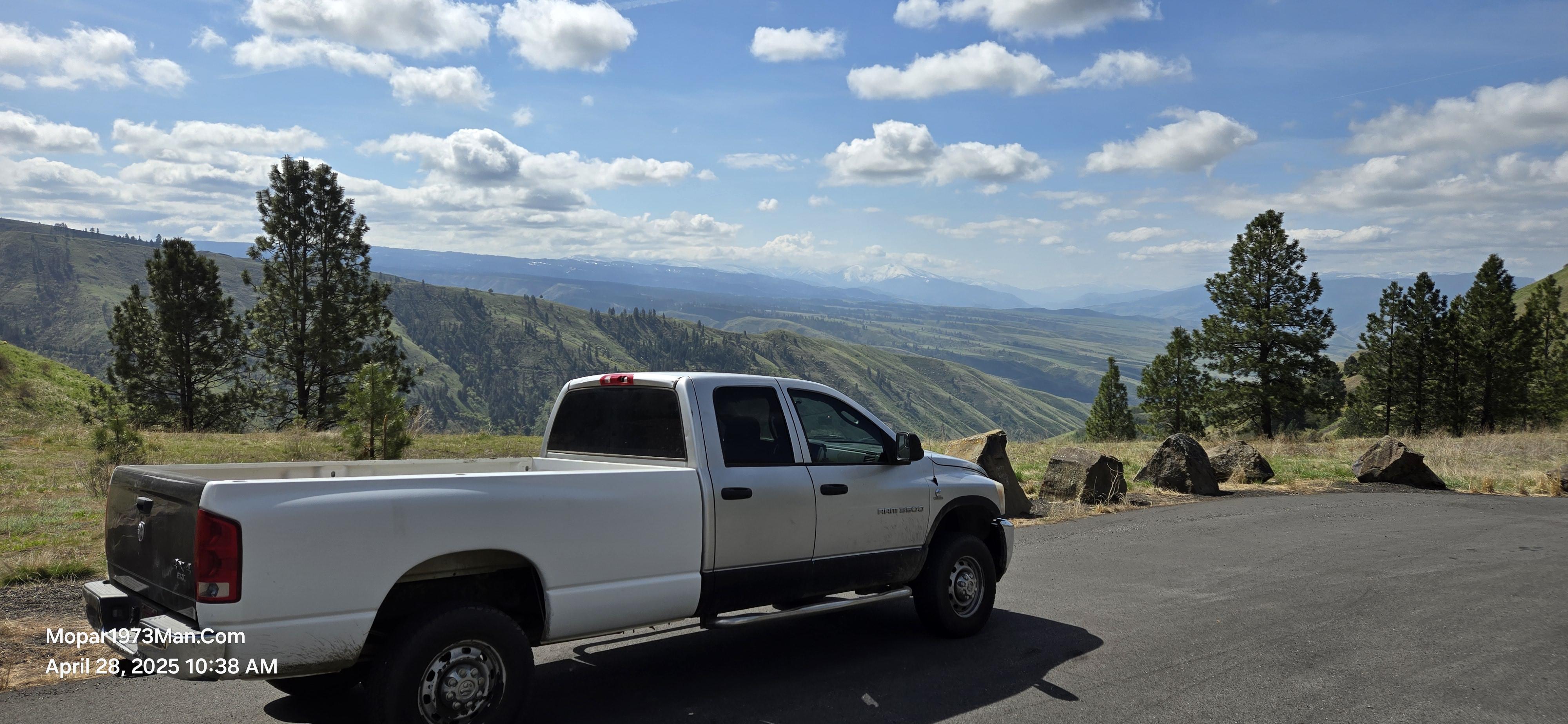
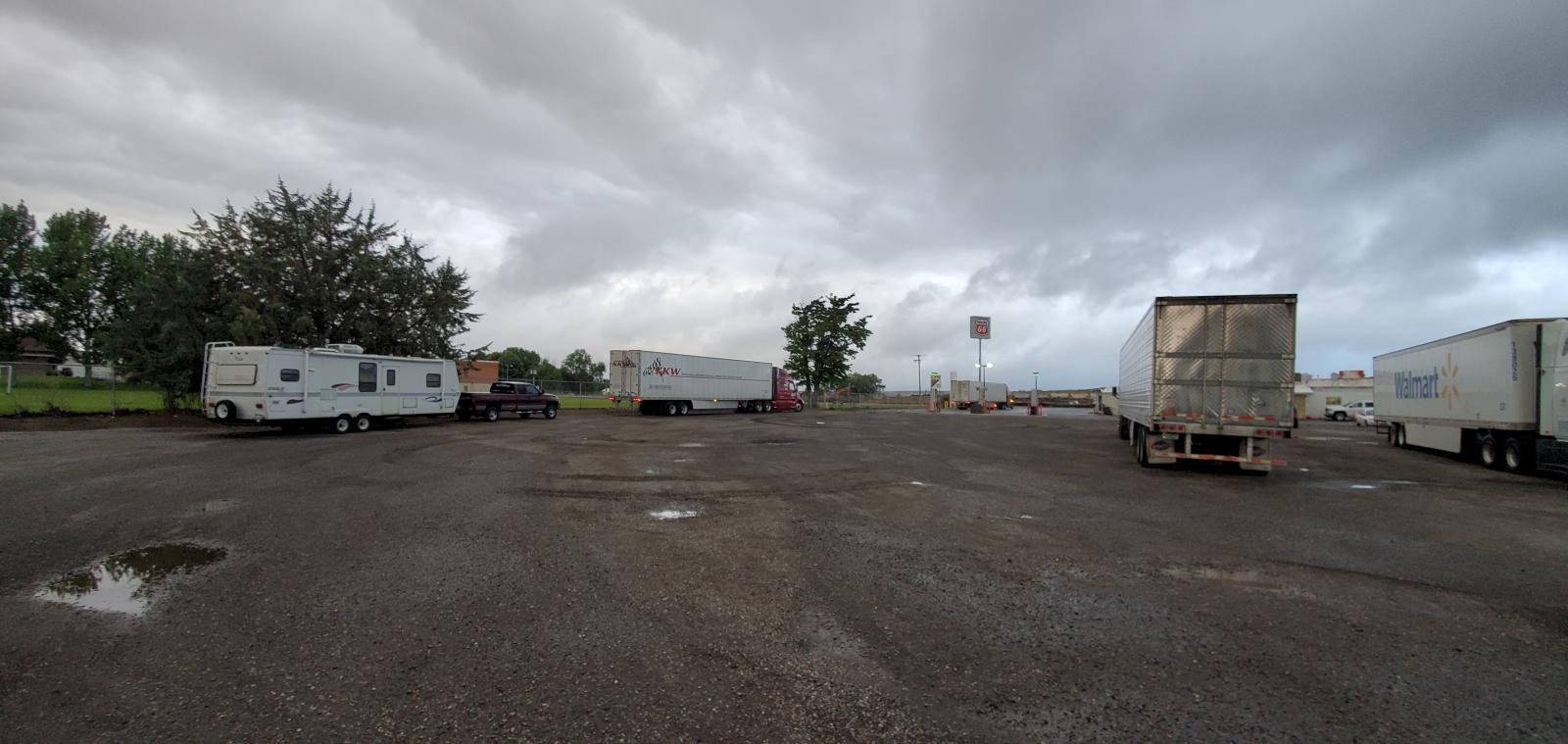
Count the numbers of driveshaft turns to the one turn of the tire. Either going to be 3.55 or 4.10 turns of the driveshaft. My magic number of 3.69 is the 265/75 R16 to 245/75 R16 with 3.55 axles. Still a stock tire size. The early years was 245's and the later years to favor the big tire crazy were the 265's. I was also wondering about the 19.9 rims. 19.5 that makes more sense. But that still puts you a lower ratio than 3.55. You could run it but always have that extra loading on the driveline. I was opting to head towards 3.73 because of the power and towing reasons. So for all the long hauls, I've done to Arizona and up north. Been a super good final ratio. Super fast to build power and pass other vehicles. Like a few days ago I took Jacob @Wet Vette, son, to town doing little oil leak hunt on my truck. When I came home through the slide I pass the construction zone and got open ground and laid on the throttle. She snapped the boost gauge to 49 PSI and the rear tires started letting go RPM took off and this was at 45 MPH (4th gear) and damp asphalt. 3.69 ratio is a super quick ratio and puts me at a perfect 66 MPH at 2K on the tach. I'm staying in 5th gear longer now in the mountains and not having to shift down as much. Being that 55 MPH isn't at 1,400 anymore. I can leave it high gear and pull easy up to 100 MPH in about 5 second from 65 MPH. Make it really strange that on CANBus fuel alone no wiretap from the Quadzilla. Truck below is the 245/75 R16 tires on Stock 16x7 wheels from early 2nd Gen. Both picture and sig below)
-
Let me enlighten you on boost leaks. I took the wastegate hose over the turbo and left it OPEN. Then went over to the manifold and REMOVED a single bolt. Then cranked it up and drove it. With the MASSIVE boost leak, I can hear the air whistling clearly. Only lost a mere 7 PSI (maxed out 41) or so. EGT only rose a mere +100*F more. The truck was very drivable yet but blowing air out massive. No excessive smoke or nothing. Just loss of about 7 PSI of boost about 100 degrees hotter that's it.
-
Yes there is a option for 3.73 gears. The last one in McCall ID that did an gear change from 3.55 to 4.10 gear for 37" wheels it was roughly $4,400 buck for both front and rear axles. What I tell people is to barrow a set of stock wheels and tires and go for a drive. Most people afterwards would just about sell there bigger tires and wheels. Yeah your sitting at 3.37:1 final to the ground so you will benefit from changing out to 3.73 gears to fit your current wheels. The 3.73 would bring you right back to the 3.55 final ratio for the most part. Like I opted for lower yet aiming for 3.73 finals and you find that the truck is even quicker. Does cap out the top end a bit but still can reach 100 MPH easy. So if you did the 4.10 gears it would put you at 3.89 which is a bit too low in ratio so you most likely right at 3.73 gears.
-
Wrong face type but there is a 0 to 60 PSI option.
-
Just to jump back here and place that article its rough but the point is there...
-
Easy enough to do... Fuel pressure https://www.dieselautopower.com/ev-fuel-pressure-0-30-r17033 Pyrometer https://www.dieselautopower.com/pyro-2-w-color-band-0-1600 Boost https://www.dieselautopower.com/ev-electronic-turbo-boost-0-40-r17333 Boost I was looking for a 0 to 60 PSI which I didn't find right now...
-
Before your add a Leveling Kit or Lift Kit and Larger Wheels and Tires First off I want to start with how to get correct final ratios. Remember that for most trucks was a 265/75 R16 tire... Like my truck came with 265/75 R16 tires even though the door sticker states 245/75 R16. The 245/75 R16 was used in the early 24V body design. The most common axle is 3.55 gears. If you are going to use a larger than stock tire makes sure to have 4.10 gears. Its a REQUIREMENT! Final Ratio Goals Optimal Goal Let me just state you aiming for a final ratio of 3.55 to 3.73 which is the most optimal for power and economy. Let's just show how just a small jump from 265's to 285/75 R16 turns the final ratio. This will now create a final ratio of 3.42:1 which is a marginal you could use it but optimally it will add more EGT's and higher engine loads. The more you keep increasing the tire size it will drop the final ratio too low. For example, going from 265/75 R16 to 37 x 12.50 R16 you are now at 3.04 for the final ratio. Again you cannot install large tires on a 3.55 geared axle. This combination is going to create super high EGT's and high engine loads so the power is greatly reduced and the EGT's will sore well past 1,200*F. Another wanting to run oversized tires should consider installing 4.10 gear for everything up to 37-inch tires. This again impacts even tuning with the Quadzilla being you are going to require a large drop in timing more retard timings just so the turbo will spool quicker. The tool I use to find the final ratio to the ground. https://tiresize.com/gear-ratio-calculator/ Me personally, I ditched the 265/65 R16 and opted for the 245/75 R16 being that gives a final ratio of 3.69.1. Cruising at 66 MPH is just about dead money at 2,000 RPM. At 82 MPH you are at 2,500 RPMs. This is a good ratio. I've gotten many trips to Boise down the I84 interstate at 80 MPH and cleared 20 MPG commonly. I'm also NV4500 transmission (0.75:1) where a 47RE transmission is lower yet at (0.69:1) these should be a touch lower in RPM. The NV5600 is close to the NV4500 at (0.73:1). Geometry Now a lot of people don't know but just adding a 1-inch lift to a 2nd Gen truck will screw all the angles up in the axle. Even the 2-inch lift will do it even worse. The problem is the axle is swung on 4 control arms. When you add lift to the axle you are swinging the axle downwards as it swings down more the control arms are fixed and the axle rolls forward more which now makes for a more neutral caster angle. This could be corrected by install adjustable control arms on the bottom this would allow you to recover most of the caster angle. Then as you lift or level the front axle the track bar is a fixed length since its farther from the frame the track bar will pull the axle to the left side some this now enhances the thrust angle to the left. Between these two angles, you now created a truck that has poor centering on the highway and darts. Then the thrust angle is off it will tend to pull left. You could install an adjustable track bar to correct the thrust angle. Wide wheels tend to place a lot of stress on the wheel bearings and ball joint being most have quite a bit of offset having the wheel poking out of the wheel well. Being you've added a long lever to pry against the bearings and the ball joints. In any case, you are going to add a lot of load on the steering box. I recommend using the standard ratio steering box. This is a lower gear ratio steering box and makes it easier for the box to steer those wide tires and reduce stress. I highly recommend that you find a good alignment shop that does not work out of a book someone that understands the lifted truck and the needed angle changes to make a stable ride. Acceleration The larger your wheels and tires, the more mass you have in the wheels the more it will take to get the axles rolling. The rule of thumb is for every 1 pound of rotational mas you remove is like 8 pounds off the frame. To show this you might remember the park where those big merry go rounds.  Like this one, you could get about 2 or 3 kids to pull it around. Bigger the Merry go round got the more kids you needed to get it up to speed. Maybe even a few adults to help out. The point is the more mass in any rotational part is going to take even more power or energy to get it spinning and even more to hold the speed up. I've studied this on many trucks and driven plenty of oversized trucks too. No matter what larger tires do come at a cost of loss of power and lowered MPGs. The only way to make it better is to ditch the weight. which most after spending a small fortune outfitting with new wheels and tires. Hence why this article is to warn most of what you coming into. Being this weighed load is there you find that EGT's are going to be higher and the engine loads to maintain speed are higher. Example of this in real life. I went to a dyno event with my truck back in 2006. All I had was stock injectors and Edge Comp. I was green to the whole dyno event but rush to get in line to run the rollers. One I ran the rollers I had 381/831 on my dyno sheet. Now my buddy with a 96 Dodge 12V jump in and ran the rollers came up just short 362/825. I gave him a big load of crap over it. He requested to get off the rollers after his first run. He pulled out in the lot and pull the outer two dual tires off and got back up on the rollers grinning. I didn't know why. Now I know why after shedding the rotational mass of the outer dual wheels and ran on the inners alone and surpassed me in power. He had a net gain of about 28 HP gain which gave him the win at 390 HP. Another example at the same dyno shop different events. I have seen a jacked-up Ford on the rollers and barely made 260 HP with 37-inch tires. Then he rolled off the rollers and took off the 37-inch tires and put on stock 31-inch tires and well in the 400 HP range. Again larger tires do limit the power to the ground. Looks cool but steals the power from getting to the ground. Achievements As for my own truck I never used any leveling kits or lift kits its complete stock. I've changed only one set of ball joints at 180k miles. I bought some cheap ball joints off of RockAuto years ago and now over 250k miles and still running those ball joints. OEM Tie Rod Ends lasted for 350k miles and was replaced only once. As for the track bar, I'll admit will all the offroad driving I manage to typically wear them out at about 100 to 150k miles for a NAPA track bar. I've replaced a few. Brakes wise I go upwards of 200k miles for a set of brake shoes. Yes, I have an exhaust brake and use it every day. With running the optimal ratio that I am I shaved off at least... At least -100°F in EGT temperature. At least -30°F in transmission temperature. At least 5% engine load reduction. At least +2 to +3 MPG gain. Most suspernsion parts lasting 200k miles. Lower Differential temperatures. More power produced at lower RPMs. Never had a single case of death wobble, never had any tracking issues or sloppy steering. I'm currently at 421k miles at the time of this article.