
Jump to content
View in the app

A better way to browse. Learn more.

Mopar1973Man.Com LLC

A full-screen app on your home screen with push notifications, badges and more.

To install this app on iOS and iPadOS
  1. Tap the Share icon in Safari
  2. Scroll the menu and tap Add to Home Screen.
  3. Tap Add in the top-right corner.
To install this app on Android
  1. Tap the 3-dot menu (⋮) in the top-right corner of the browser.
  2. Tap Add to Home screen or Install app.
  3. Confirm by tapping Install.

Mopar1973Man

Owner
  • Joined

  • Last visited

Everything posted by Mopar1973Man

  1. It's OK but getting up there. I would suggest doing the W-T ground wire mod. I'm still down around 10mV AC (0.010 ACV). It will help a bunch.
  2. No, as long as you buying the stock OEM relay made for the truck. They are design to do this job for years. Personally I fire up and get moving as soon as possible. There is nothing worse that starting a truck leaving to idle at 800 RPM having the grid heater clicking on and off to heat the manifold drawing more power than the alternator can produce at 800 RPM. Like I said I typically unhook the grid heater in April and leave it unhooked till October. All this time the relays can do what they want but no power present. But yes starting and leaving it idle 800 RPMs is the absolutely worst thing you can do to the alternator on a cold start. If you had either my high idle kit or the Quadzilla where you can high idle now at 1,200 RPM now the alternator can handle the loads between being it like being driven 20 to 25 MPH and the alternator can cool the diodes because of extra fan speed in the alternator. Back to the batteries if they are weak every time the grid heaters heat then the load majority on the alternator since weak battery normally won't carry much of any loads. Again now you end up with a hot alternator attempting to burn up the diodes.
  3. Comes from the ECM. You see the ground is supplied by the body ground and the ECM controls the +12V to the relays.
  4. No. Because I was stuck in Ontario at night without a alternator so I cored it out and had it test it failed completely as for what I have no idea since I wan in Ontario and no time to pull it a part in a parking lot with limited tools and knowing my PCM was fried at that point it was done. Still in all... If you short the green wire to ground you get a runaway alternator that is overcharging. No damage to the PCM will occur. Now short the blue wire to ground and PCM will fry. Heat is a sign of high electrical loads. First place to start. Also sign the batteries and/or cables are not up to the task.Weak batteries or shorted cell battery will still cause the alternator to get hot. Just like my landlord at my second shop he was using his winch for long periods with bad batteries and blew the alternator fuse. Again the alternator is not suppose to hold all the heavy electrical loads, that is the batteries job but if the batteries are not up to the task then its handed off to the alternator and in turn shows up as heat. As the load continues the alternator burns up brushes and/or didoes. So far I've never seen winding burn... Here again that glowing bolt is a sign of poor connection again points back to what I said of poor cabling or connections. You could of seen this using the voltage drop test and would of been high volt number there. I'm sure higher than 0.2 volt drop. Remember this same test can be uses on "ALL WIRING" of any vehicle right down to small engines like motorcycles and all the way to semi-trucks. It can be used on any circuit to measure voltage loss as the circuit is running. Optimally you want ZERO voltage drop. Less is better but in the article it calls 0.2 volt drop a fail for starting cables. Now a example of this in action. I had a 1982 Honda Sabre 750cc V4 motorcycle the cluster was semi-digital. When I was riding at night and using my head light and fog lamp (up graded to 100w) both the cluster would spit out weird things at times. This point out I've overloaded the stock ground with the added wattage of the fog lamp. Come to find out the master ground for that motorcycle was under the fuel tank and was only a 16 gauge wire. Only ONE ground. After measuring I was getting 0.3 volt drop on the ground circuit. I added one extra ground up by the headlight and fog light to aid in this voltage drop afterwards drop 5 to 6 mV DC. As you see... That was a change I made to improve light which came at the cost of overloading the master ground after allowing for a extra ground problem was gone. Now using this information this is why on my truck I went the other direction and REDUCED the electrical loads and now gaining ground and not having the alternator issues like I did. I've double and triple check this on at least THREE different trucks. I know the W-T ground mod does work! As for the parallel ground does not gain anything in the THREE othere truck I've try it on. People tend to forget I'm not just working on my truck and testing but working with many owner and trucks and seeing if there is any change. As for the parallel ground it OPTIONAL in my mind and going to do anything for ground performance. Being all them resulted with and without parallel ground in the 2 to 8mV drop that doesn't change on good master ground cables. I can see it for W-T when hes got linear, ham radio and high current draw with a need for absolutely CLEAN POWER. Any noise is brought back to the radio as frequency noise in the back ground. Hence why he's done noise mods to his AirDog pump to cut out the RF transmission from sparks created at the armature of the pump.
  5. Common though is to replace the multi-function switch first. Being the wipers are typically a different circuit but the contact might of failed and touching off the wipers for the left turn side. Another common issues is usually function quit completely is constant use of the tilt function of the column typically breaks the wires to the multi function switch or the ignition switch. Wipers Turn signals.
  6. Nice part of the spin on filter you can rinse and reuse several times just check the bottom for rusting issues are you clean it out. Now as for the filter @IBMobile posted does work but like @LorenS mentions there is very little debris holding. No to mention if mounted sideways is will plug up quickly. Where the spin filter typically hang and the debris settles to the bottom when the truck shut down. In all my year with the AirDog now I've never had to replace the water separator till there was signs of rusting started then I would replace it. Ever one that I've cut open had very little debris.
  7. I notice @IBMobile posted... That right there is actually controlled by the battery temp sensor. As the battery temp rises it can be as low as 13.2V. Then as battery temperature cools then it can be as high as 14.8V. Charging voltage can and will change depending on how long the vehicle is driven and outside temperature as you drive. In all my time driving back and forth to Ontario, OR I can say it can be to that extremes I posted. Hot summer day idling in traffic it can seriously drop close to the 13.2V.
  8. The early ECM's for the 98.5 and 99 was rather weak ECM's and had several issues with the EPROM. I remember a spell where Smarty tuners where causing issues because the Flash EPROM and would only hand like roughly 1,000 re-write cycles and then fail to boot.
  9. I've got one here but its not cold enough this year for it. I'm not seen any minus numbers and barely any snow at all here. I typically use the 190*F. @pepsi71ocean has been running year round... No issues around New Jersey... The only thing I can say is the thermal efficiency is much better running a 200*F thermostat being most of the expanding heat is converted into work and not absorbed by the cooler coolant jacket. Hence why a lot of gasoline engine started going up in temperature and so did the 6.7L Cummins. Not to mention the 6.7L thermostat does fit our 24V heads. This how you get the 200*F thermostat. I won't suggest this for anyone towing heavy here in the states but up north in Canada and Alaska it would be a good thing. I will say it will keep the cab MUCH MUCH hotter for sure. Fan on lo and temp control way down. Actually my gauge is dead on the money temp wise. As for cetane part of that is refined... ASTM testing scale. You can look up the fuel specification from the manufacture and plug in the values and see what the actual cetane is. This way my local Cennex Fuel station years ago when I did the study. They listed both the summer fuel and winterized fuel as well. Then I found the 55 barrels that they were adding to the fuel when gelling issues where a problem. Light green is winter fuel and dark green is summer fuel.
  10. My alternator shorted out on the blue wire side. This was enough circuit to burn a hole through my PCM and never blow the 20 Amp fuse that protects the PCM. All I can say that alternator had a short on the blue wire side. Last alternator I had rebuilt was good but the brushes was fried and had alternator shop replace them for $40 bucks. This last alternator I don't think had any problem but time was short I needed my truck and replace it to find the problem came back and was the PCM protection fuse fell out. So, technically I've not had a alternator failure really since the W-T ground wire mod.
  11. All mine are are aluminum sign cut up so they fit inside the grill holes. Bow the metal slighjtly and then only need 1 bolt to hold them in place.
  12. Your old than myself... I would of been 8 year old then.
  13. Correct. It basically I get too much tension on the slide rail fork that I manage to slip between the rail. Just gotta be mellow when shifting. I had to fix a 1992 Dodge Getrag 360 for the same this a couple weeks ago. Old Aluminum road sign. The bowed the piece slightly so the bow up in the middle the using a single bolt in each one I can pull the bow down filling the void. Used nyloc nuts.
  14. Not true. When diesel fuel cetane is 45 to 50 cetane it will ignite easy with compression. Now take summer fuel attempt that and you might find a different story. Back when I done my last research of fuel blends they were upping the xylene mixture to increase cetane value. https://en.wikipedia.org/wiki/Xylene Xylene reduces the flash point of the fuel so compression pressure with cold air can still reach ignition point. Hence why most every fuel station up here in the north is all running Winterized #2. More you raise the cetane the lower the BTU's are going to get. Another part why I suggest to never remove the stock filter you gain warm from the manifold for the fuel, then the fuel heater run at any temp below +70*F. Then if you step up to 200*F thermostat you give more warmth (better thermal efficiency) to the cylinder promoting ignition and since the coolant is hotter by 10*F now the manifold will be warmer helping to heat both the fuel and the air. Again way I'm set up my IAT and Fuel Temp are always with +/- 5*F of each other. I use my grill insert to block out the cold wind over the intercooler. Side story I was coming back from Lewiston there was a truck travelling the grade super slow like 45 MPH in a 65MPH waited for my time to pass and when I did I down shifted to 4th too much zeal and would you believe it I stuff the stick in between the shift rails and stuck in 4th gear. So, I ran the tach up to 2,500 RPM holding barely 55 MPH in 4th gear and climb the grade ot the top. By the time I got to the top the coolant was up to 201*F and fan was locking up and I watch both the coolant, IAT and a small fuel temp drop. This example shows that covering the grill allows for unusual issues to be handled. If I was covering the radiator face I would of overheated and been stuck in the middle of the road attempting to repair. Thank Gawd for my set up... I got up top and fix the stick by pulling it up resetting the rails to neutral and drove home.
  15. Hmmm... I remember a punk kid riding in my Dad's 1973 Dodge Charger to the corner store to get fuel on the weekends and remember seeing $0.589 for a gallon of leaded gasoline, yup I was born before the unleaded fuel change came about.
  16. I haven't plugged in the block heater in over 7 years now. This winter I only paused a few times for the first cold start up waiting for the light. Like right now its 32*F outside I would just fire up and leave. Not to hijack... We got some wood but soaking wet and started splitting yesterday while we could with good weather. All of out working to move rounds for @Jthor then @Wet Vette and myself were picking up and loading a truck to move to the covered wood shed. We got a small pile start but more to come today. Between the death of @MoparMom (Feb. 22, 2020) then the start of the COVID-19 lock down. Closure of most forest and access to wood. Then later in the summer release the forest but I got boom with more work than I could handle. I managed to get 1 trailer load of red fir but that is already fully burned up and gone. Takes roughly about 9 to 12 cords every winter. So I've been running the heat pump set for 65*F and letting @Jthoruse the majority of the wood being the other house has no secondary heat like electric or anything. Wood only heat. Back to normal threads...
  17. A short on the green wire of the field to grounds will do exactly that. A grid heater(s) commanded for excessive long time or contacts arced and held excessive. Like with my landlord truck (Russ) his blew the alternator and the charging fuse by using his winch with weak batteries placing nearly 100% of the load on the alternator. Alternator is never suppose to hold the entire load of the vehicle it suppose to hold the loads on the batteries and alternator fills in a balance charge to maintain 13.5 to 14.5 this rule will not change. Now if the batteries do not have the capacity for said electrical load it will force the alternator to make up what the batteries will not hold. Again this comes back to weak batteries and excessive loads. Starting out with my old school halogen lights (45w /65w) and 4 flood lights (100w a bulb) This is one reason why I ditch the four 100w flood light I had below my bumper (400 watts / 14.5 volts = 27.5 Amps DC) then the old stock headlights are 45w lo and 65w hi beam (90w / 14.5 volts = 6.2 Amp DC) this is a total that is a total of front lights excluding markers and tails is already 39.9 Amps DC for my old setup. Upgraded to HID's and LED driving light. Now I've got Morimoto HID's which are 35w a side so that is 70w total. (70 watts / 14.5 volts = 4.8 Amps DC) then changed out the four 100w halogen bulbs for 2 PIAA 530 LED Driving lights which is 18 watts each which is 36 watts for the pair. (36 watts / 14.5 volts = 2.4 Amps DC). Before - Total watts and Amps - 578.5 watts at 14.5 volts DC, drawing 39.9 Amps DC After - Total watts and Amps - 104.4 watts at 14.5 volts DC, drawing 7.2 Amps DC - Extra gain with huge bonus of better light over any halogen bulb. (rated for 4,000 lumens). This is a total of 554% saving compare to the old school system I had. Total savings or power which is 474 watts and 32.7 Amps not used by the alternator in just lighting upgrades. Remember we have a stock alternator rated for 136 Amps. I'm not looking for bigger alternator just better efficient lighting and other electrical items. Just looking at my tail lights most of them are 250mA a bulb again a big saving of power vs. old incandescent bulbs the truck was made with. Just now looking at all my changes I've free up a bunch of the alternator and much less to power. I've even though about pulling the tail light fuse and replacing the 15A with a 2.5 amp which is still over kill. Again seeing the electric saving in being able to swap out a fuse to such a small size. LED and HID light is a best option for reducing electrical load.
  18. Yes. One example using your set up and failure points. So if you voltage drop test both cables (NEG) and there is 0.003 to 0.005 volt drop this means that the voltage to BOTH BATTERIES is with the alternator charging 14.5 volt will net you roughly 14.497 to 14.495 volts to both batteries not even going to notice. Battery temp sensor is only going to change the voltage between 13.2 volts to 14.8 volts period. It is not going to fix a bad battery or cable. The balance of the batteries is based directly on the condition of the cables if there is excessive voltage drop then you will be imbalance between batteries. Like I'm showing if the voltage drop in mere 0.003 to 0.005 volts you not going make zero difference moving the battery temp sensor. As the current flow on the positive cable its shared directly and equally to both batteries. The ONLY way not to be equal charge is... Bad battery with bad cell Bad cable(s) with more than 0.2 volt drop. So if you have a mag-lite flash light do you only replace one of the two AA batteries or do you replace both? Me I replace both. Again if you want to verify a change then use you jumper cables between two point and see if the voltage changes. Say for example the passenger NEG cable was bad and showed a 0.3 volt drop which is a failure. Now take a set of jumper cables and jump between the block and the passenger battery. You should see a +0.3 gain of voltage at the battery. Now that tells me exactly that passenger battery cable is BAD and requires replacement. Adding that parallel cable will ultimately mask this and the cable can fail and now stress the remaining driver side ground which is not and will start to fail from over current. This why I DO NOT suggest this parallel cable mod nor suggest moving the sensor which is not going to change the charging which is still set for between 13,2 in the summer heat to 14.8 in the dead cold winter.
  19. No, it will not make any difference. If all cables are the same then the voltage is the same. Alternator will deliver equal voltage to both batteries. Moving the sensor will not change that out come because if cables have the same voltage the charge is the same. The batteries do make a difference if one has a shorted cell and the other doesn't. Regardless your back to the same problem the battery temp sensor is NOT a protection device but to set the charging voltage that's it. It will not protect a battery... When all the cables are equal then it up to the batteries to charge equally which both batteries will warm up the same. Like in my house battery bank I've got one temp sensor. It will not prevent the far left battery from temp swings again if the battery are all equal the temps are all the same TILL you have a battery or single cell that is shorted now that SINGLE battery or cell will get hot. It not the battery temp sensor job to throttle back because of a bad battery cell. It's up to the owner to replace his BATTERIES not move the sensor to attempt to throttle back for a dead cell. Not a good plan at all.
  20. Back to the wiring... I know W-T has been floating around and keeps telling folks they NEED to parallel both ground and positives. This will not fix the problem. It will not stop a battery from boiling over either. Again if there is a problem with main cables make sure to load test them if there is over 0.2 Volt drop then those cables need REPLACEMENT. I've tested several truck using jumper cables and found ZERO change in parallel ground cables. There is ZERO GAINS. This will not fix a problem with a bad battery cell that is overheating. Again this is due to improper maintenance of the battery and not proper recharged. This is more common with city folks that drive very short distances. You draw out 500 to 700 Amp to start the engine cold than drive barely 5 to 10 miles and shut down then the batteries are still discharged. Again I find more that the OEM main cables are oxided in the jacket, bad terminal that are oxidized, or just plain bad batteries. Like my last Cummins I worked on here, I tested ground cables on had just a mere 0.003 to 0.005 (3 to 5 mVDC) voltage drop. Again with jump cables parallel between ground did NOT change the outcome of the test.
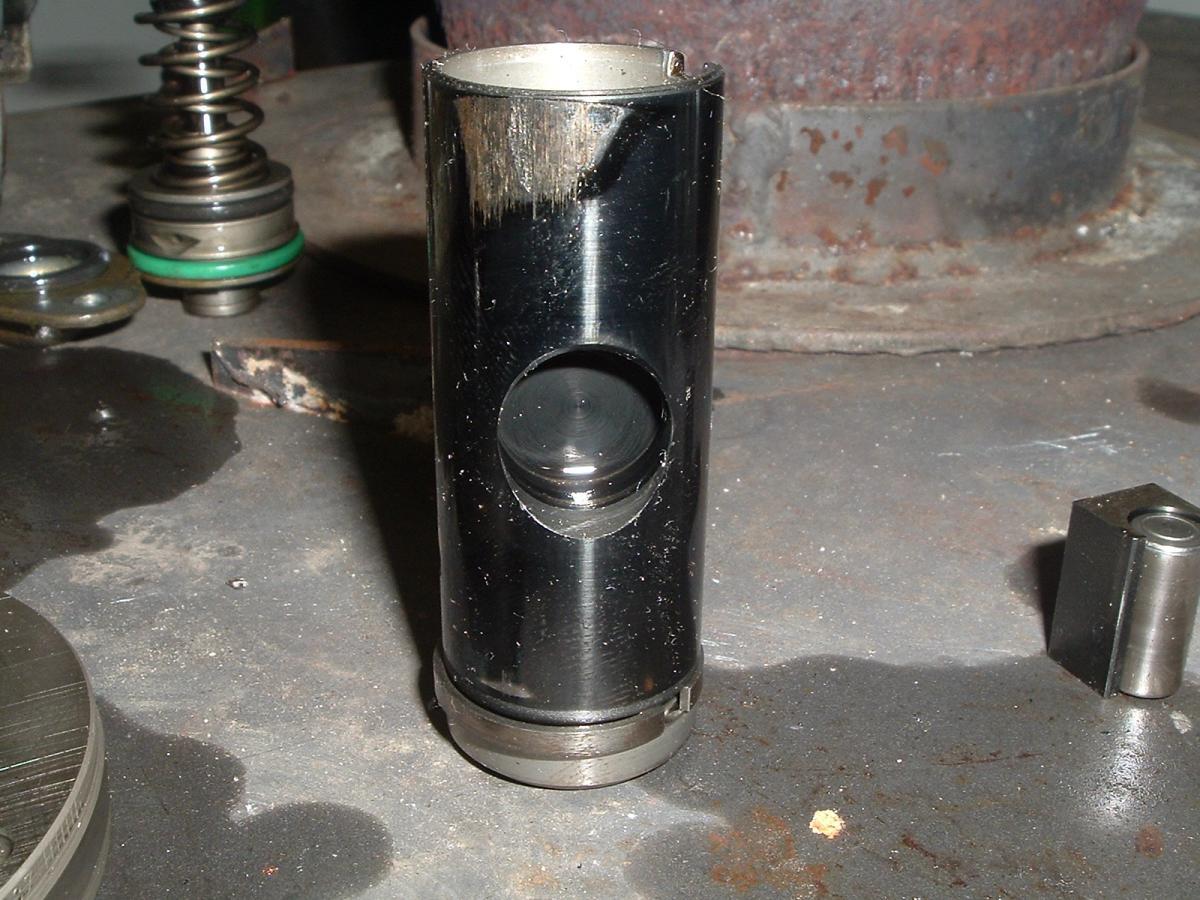
  21. Like finding some members in the high 160's for fuel temp is kind of alarming. I can see why people have issues with VP44 and the PSG frying in southern states with it all be returned to the fuel basket. After being to Arizona in early summer and its starts at 78*F at 5am and the ramps up to over 120*F by midday it really hard to keep anything cool but it even worse for some returning hot fuel to the sender basket and re-pumping back to the VP44 and wonder why the VP44 is failing so often. I'm pretty sure the upper limit before tripping the P0168 code is 195*F. Only seen one member here ever post P0168 code... Even the Quadzilla is set up to trip the fuel temp alarm at 160*F. But I've seen several members reporting 150 to 160F temps... Majority are running returns in the fuel basket. Just remember electronics do not like hot temperatures. No there is no way to put a heat sink on the PSG cover. It won't work being there is a air gap between the cover and module. Not to mention the PSG is heatsinked to the fuel side. So if the fuel is hot its going to heat up the PSG electronics. Of course this shortens the life too. Good return flow from the overflow valve helps but again if the fuel is already hot the return flow is meaningless being it supplied with 150 to 160 degree fuel. As you can see in my photo the circuit board is mounted to the fuel side. There is a air gap on top then the cover plate also has a air gap too. So yes fuel temp is important to cooling the PSG module. Now that goes back to people trying to install fuel coolers and fans to cool the fuel before the VP44. Again separate your return and supply so you not pump back the hot fuel and the fuel temps go down.
  22. Can't for smog controlled states being it will set the CEL and P0380 and P0382... This is why I unhook my grid heaters in April and leave unhooked till October. The power lead is right at the drivers side battery positive. Takes less than 5 seconds to deal with. Most morning I don't even WAIT TO START I just hit the key and go. This winter has been super mild and not really gotten below 32*F for long.
  23. DELETE function is disabled for all members. Member get the hide function. This prevents members getting upset and deleting all their content. Which has happened long ago. Staff have the delete function but it will not delete instantly. It's held in a "virtual trash can" for 30 days before being removed. This is to catch accidental delete of message(s), post(s), thread(s). This why HIDE is used more so. As for performance I've broke the database down to active post in one spot for quick recovery for daily reading. Then post older than 1 year are put in a archive to store the old post. This was a performance booster. As for content... Oh how I know about that being I've had a legal document sent o me from a fuel additive company for the content years ago. Still in all I still stand up for "free speech". I only ask that every one is polite to other members and treat each other like family. As for illegal activities that is another reason I don't delete there is a track record. If I got to produce information because of fraud or another crime then I need that data for legal reasons.
  24. @dripleyseen me a support ticket for lack of "hide" ability. If you don't see it. You happen to be a separate permission.
  25. Absolutely will not... It will not limit the output... Remember I've got this huge 1,000 pound battery system here and it did NOT protect it when 1 cell went bad. Still cost me $4,800 replace all batteries and the only way to fix it is not battery temp sensor but replace the batteries.

Configure browser push notifications

Chrome (Android)
  1. Tap the lock icon next to the address bar.
  2. Tap Permissions → Notifications.
  3. Adjust your preference.
Chrome (Desktop)
  1. Click the padlock icon in the address bar.
  2. Select Site settings.
  3. Find Notifications and adjust your preference.