
Mopar1973Man
Owner
-
Joined
-
Last visited
Everything posted by Mopar1973Man
-
Guess what I'm in the same boat. My fuel gauge just quit the other day and I'm got a new sender in the fuel tank. Randomly my volt gauge drops to 8 volt and homes CHECK GAGES light. Fuel gauge just sunk to Empty and stayed. Im feeling it more PCM fault than wiring. Being PCM controls those two gauges. Only difference is my CCD bus is working and displaying the info as the PCM is reporting. The only thing I can think of for mine if the fender connector is corroded pins for the fuel gauge.
-
Tone ring coming apart on the crank? There has been a member that broke his tone ring when it fell out while running. It can happen.
-
Only thing different is Quadzilla allows for all timing control. Fuel side is easy how many % over or under stock fuel. Timing is the tough one because injector size, cetane levels, pop pressure, even tire sizes and final ratio affect how timing is figured out. Best I can say is the lowest engine load is optimal timing. Even with bitter cold and winterized fuel 18 to 19 MPG has been my average. As fuel prices go up I'll start to slow down. MPG start to rise. Last tank I was towing home an 1995 Ford F350.
-
I have to being wire tap and/or CANBus mean spun tires. You ain't winning if your spinning...
-
Output speed sesnor on the transmission possibly for the wild shifting. P1698 code you are going to do some testing of the voltages typically 2.51 and 2.49 volts when at rest when the computers stop talking. Pins 3 and 11 vs. ground.
-
You could still wire tap it when your ready then just leave the power level 2 (suggested) level 3 (depending on how aggressive your curve is)
-
2nd Gen styled doors now this should be a treat to watch being made.
-
Environmentalist believe this saying... "Solution to pollution is dilution..."
-
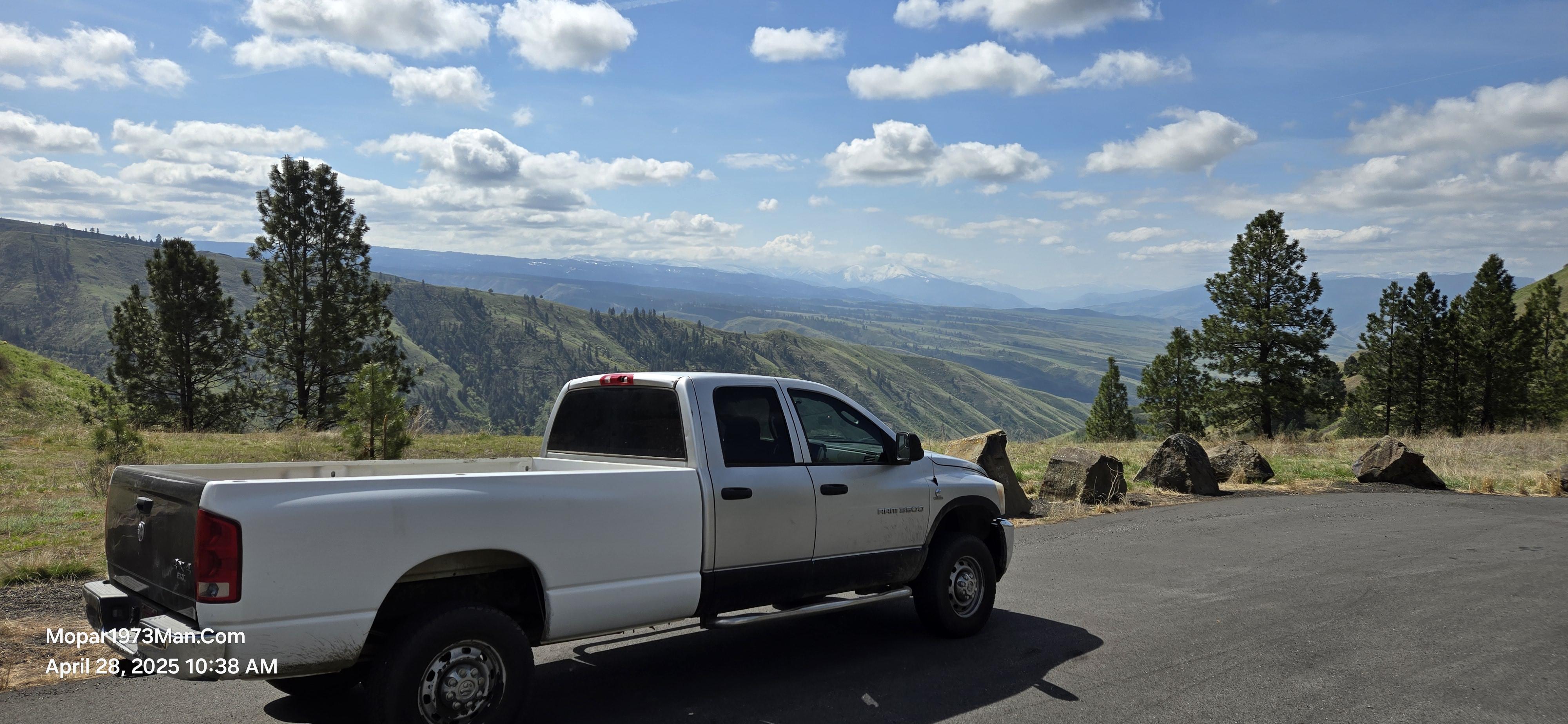
No that my plan you can't have it! Haul the RV and have my 2006 Dodge set up with tools to fix @JAG1 truck that is always broken.
-
USA is not polluter... CHINA -

-
Talk to @Blue-Top Steering he'll set you up.
-
... and social media. I don't watch a lot of TV now. I dropped out of the FB crap too.
-
Still the biggest problem I see... Now think of all the gun laws and infringement that the Gov't have leveled on the US citizen concerning firearms and weapons.
-
Make sure about the oil... Any water content of the oil should be heated till the oil is clean water free. Filtered oil make sure no particles or debris is not going to plug up your filters. There was something about salt content you had to watch for too. Been awhile since I last read about this.
-
Like I said before the P1693 doesn't exist by itself. Injectors can run poorly when they are popped below 300 bar. Typically around 280 bar it get like a misfire and rough idle. Now in a bit of studying I've done on injectors you can lose up to 5 to 10 bar within the first 25k to 50k miles. As the parts settle and wear in the pop pressure always drops a bit.
-
Still love my EV2's...
-
One of the low quality gauges. I would re-consider either Autometer or ISSPro.
-
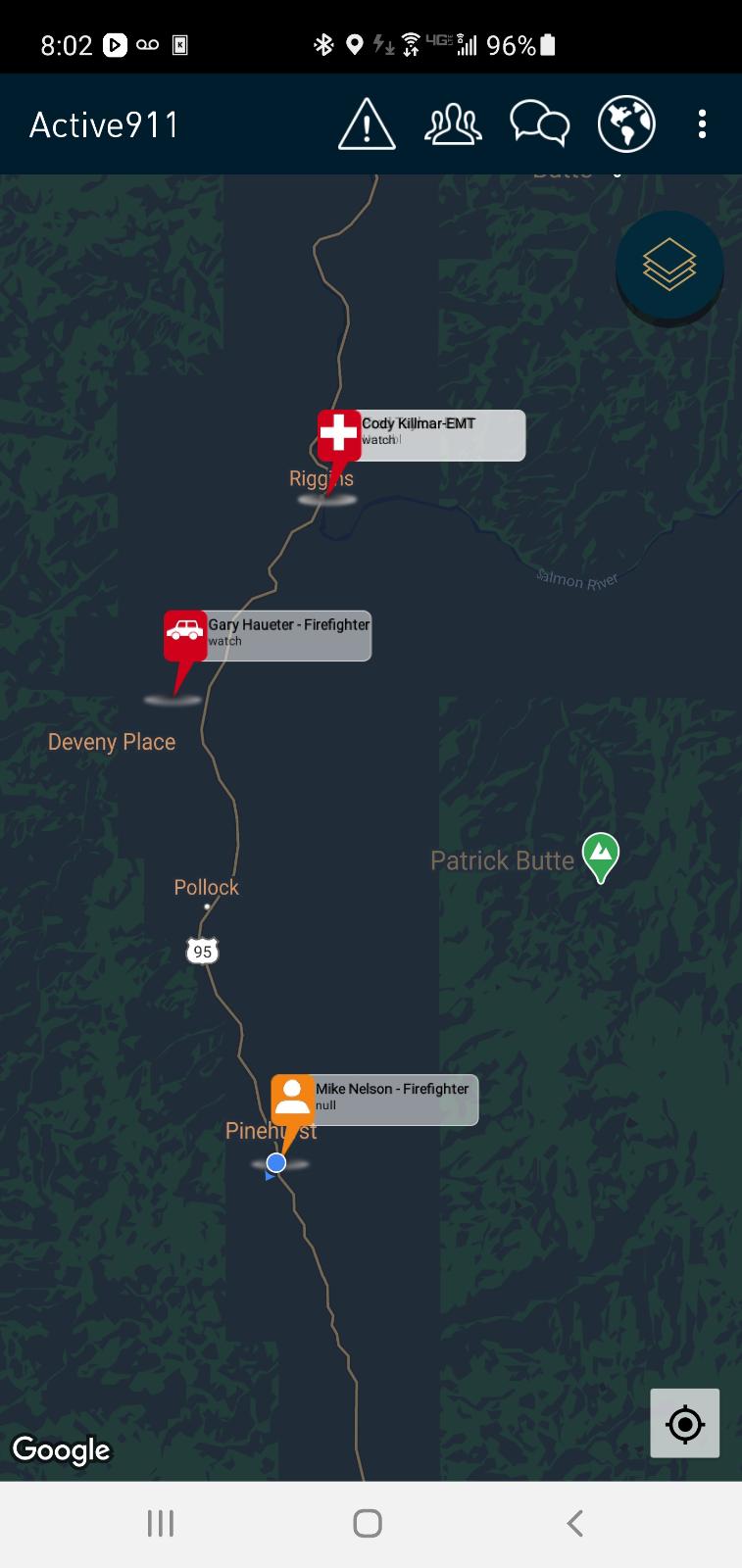
That is the beauty of living where I do. There is nothing out here. No one is stupid enough to try coming up on the property. Then if you think you can grab and run. There is only highway to the north and south for lot of miles. Your on highway 95 that has no where to go other than north or south. Your not going to make it far before being picked up. Amber alerts are typically snagged in this stretch because Council (Adam Co.) then McCall (Valley Co.) and the Grangeville (Idaho county) have you trapped. Can't go north Grangeville (Idaho Co.) is blocking, Can't go south on 95 Council (Adams Co.)is blocking, then try to take Idaho 55 nope McCall has you blocked (Valley Co.) Being I'm already part of the Salmon River Rural Fire Dept everyone has my back. We've updated paging services which now my cellphone is a pager and shows me location of my crew and other support units. Here is what I can see for just for now... I know exactly where my support team is located at all times. This is a paid app that Salmon River Fire Chief set up for about 10 to 14 of us on the fringe edge of radio signal. You might be fast, but no one can out run Motorola & Android... Yes I've got my fire radio here and could dispatch for sheriff or support at any time.
-
Dang that cost more than the rest of the bracket making the price super high. The press fit will not work because people like to super torque the fitting because there scared of leaks. It would just spin it out of the hole. Even just standard plumbers solder would even work. I've solder my fitting to my PTO plate for my trans temp gauge and ZERO issues. 3 years counting. I can get double female brass fitting coupler for much less like cents now press it in the hole and heat and lightly solder. Then paint. Same thing Eric did on mine because of even getting a press fit was easy to spin the fitting out of the bracket with just getting the sensor tight. Hence mine is just tack welded on the bottom.
-
My current tune for daily driving uses quite of bit of timing. It 5.5° between bands for max timing reaching 29.5° at 3,000 RPM. Starts out as low as 13°at the 1,500 RPM range which give way better launching power because of the good amount of retard there. Spools very quickly. Towing wise I could use my daily tune and just drop to level 3 and NEVER past 1,200°F towing or not. Still have CANBus fuel but even the fuel map I'm running is flat between 5 to 15 PSI. This give daily driver manner and not smokey at all. Now after 15+ PSI of boost now both the wire tap and the CANBus ramp up together give way more power. Once the boost gauge passes 30 to 35 PSI regardless of my towed load my rear tires will be spinning this has happen more than once. Just easier to limit out the Quad to level 3 and not even think.
-
I rather got light than aluminum and might consider coroplast. It light weight in a fairly cheap compare ot aluminum would transfer cold to the holding tank where the coroplast would not. Giving me better chances in cold weather not to freeze up. Heck its only 23*F here...
-
Size of tires? DAP injectors +150 HP (7 x 0.010) popped at 320 bar HX35/40 Hybrid (60/60/12) turbo 245/75 R16 tires Hankook ATm 3.55 gears NV4500 5 speed Valair dual disc clutch I'm for the most part smoke free on the highway. Between this combo my final is 3.69:1 to the ground.
-
I could make them here but I would have to tool up a bit. I would need a good hacksaw or chop saw. Then drill bit to drill 2 holes and 1 mounting hole. The press fit the two couplers in the bracket and braze the fitting in the bracket. Now paint it black and place it up on the store. Mine was produced by Eric at Vulcan Performance but he's not really wanting to build those for me. I kind of want to make a tester edition where there is four ports. This way the sensors can stay installed and a test gauge installed in the test ports and verify in really time how accurate the gauge is in real time version pulling the gauge sender out attempting to tee the line and fit it all under the hood. Even the simple gauge bracket I could build pretty quick.
-
What size injectors are you running? What size turbo do you have now? What size tires are you running? What axle gears do you have? What transmission do you have? Why the questions... We need to know how big the injectors are so we know how much fuel your spraying in the cylinders. Then What turbo do you have to support the amount of fuel your spraying in the hole. If very possible to have big injectors but stock turbo and be too smokey. Tires size and gearing has HUGE impact in performance. This is one reason I dropped from stock 265's to stock 245's. This dropped my final ratio from 3.55 to 3.69 placing my power to the ground and dropped the engine load about 5% to 8% versus stock 265's. Better economy and way less smoke. Transmission type also matters because the amount of retard a manual requires where a auto can hold higher RPM's through a shift and not require much retarding. Goes much deeper too... If your final ratio is lower then 3.42 (285/75 R16) your going to either need to change tires or gears. There is no tuner that will clean up the smoke and high EGT's created by improper gearing. Optimal final gearing is 3.55 to 3.73. Anything lower than 3.42 is going to require regearing and/or tire swap. What pop pressure are injectors set at. This affect timing... Like I increased to 320 bar for cleaner spray loss a bit of flow. But less smoke. This also make my injectors RETARDED! Catane of the fuel local to you. Higher cetane has less BTU's but requires retarding of the timing being high cetane fires easier and doesn't require a lot of advanced timing to make it fire. If its too advanced you could make negative torque in other words the pistons travelling up to TDC but the diesel fuel lit off too early and now is pushing backward on the piston as it still coming to TDC. Once it breaks over TDC then it makes power. (Over advancement). Remember lower the cetane the higher the BTU energy! Like I'm set up at 66 MPH I'm a perfect 2,000 RPM average EGT's on flat ground is 550°F then at 82 MPH i'm running 2,500 RPM's this is interstate travel. I'm only up to 700°F EGT's but still able to reach my cruise timing below 25% on my tune even at 82 MPH and 2,500 RPM. No problem.
-
That is correct... The PCM is the primary computer with the most information. It holds all the info about the truck and options. The ECM is a secondary computer and relies the PCM for complete info. The PCM is the starter of the CCD Network and the instrument cluster is the Bias Voltage module to get the CCD bus set up. Without the PCM there is no way to tell the ECM that road speed is over 20 MPH turn off the grid heaters. Again like the ASD relay that shuts down the engine if way out of range. That is also controlled by the PCM. Keep in mind the Cummins ECM is NOT OBDII compliant. Look up PID 1C and check out what it reports. Hex 05 which states the ECM is not OBDII compliant. Weird but true.