


IBMobile
Staff
-
Joined
-
Last visited
Everything posted by IBMobile
-
I found it in yesterdays newspaper, Hickory Daily Record. Local Chicken Man found on side of road after blowing stuff up.
-
My 4X2 truck on the left with 245/75R16 on factory rims. @JAG1 4X4 truck on the right.

-
Then a little after that a little of this
-
This is how I test a fan clutch. Visual inspection: Is there any staining on the clutch housing to indicate a fluid leak? There should be no leaks. Is the thermostatic coil spring still attached to the front of the clutch and not broken/cracked? Is there any play in the center of the clutch and the mounting nut? There should be no play. Does the fan blades spin freely with little effort, some effort, or great effort? If with little or great effort the fan clutch is bad. Is there any play/roughness in the fan pully bearing? There should be none. Check the condition of the fan blades. There should be no cracks or pieces missing. Operational inspection: Run engine until thermostat is open. Drive if needed. Now with the vehicle stopped and brake set, block the air flow over radiator, I use cardboard. Bring the engine speed up to 1500+ RPM and hold it there. If there is a roaring sound at this stage of the test then the fan clutch is locked up prematurely and should be replaced. When the temperature gauge indicator needle moves to the right of center and is over the 0, remove the cardboard and keep the engine speed at 1500+ RPM. The sudden rush of hot air will engage the fan clutch very quickly, about 30-45 seconds. You will hear a 'roaring' sound as the fan clutch engages and draws large amounts of air over the radiator. The temperature gauge should move back to the center position and the roaring sound subside as the coolant temperature returns to normal. If there is no roaring sound and the coolant temperature does not decline, reduce engine speed to idle then turn engine off. Fan clutch is not locking up and should be replaced. I've seen people check the fan clutch operation by sticking a hose, rolled up paper or some other soft material against the fan blades while the fan is moving. I don't recommend this type of test. If the fan clutch is not engaged the fan will stop spinning when the outside resistance is brought to bear. If the fan clutch is locked up the fan will kick out what ever is put against it and could cause damage or injury.
-
How is the air flow over the radiator cooling fins, rat nest or other obstructions between it and the intercooler? How is the coolant flow through the radiator cooling tubes. No blockage with calcium deposits or other debris?
-
Don't drag my coffee into this. We all ready have socks and sandals.
-
It's on the orange with black stripe at the middle connector (B11) on the PCM.
-
That's what I tighten mine to.
-
I had that problem once pulling a boat out of salt water. It was low tide and I had to back down to where there was algae on the ramp. Have you had this problem before or just this one time.
-
Depends on if their mom dressed them (with) or not (without).
-
Had one of those the other day. I was a service on an MBZ and talking to the customer about his car I asked him if he checked his oil level between oil changes. His answer was "That's what I pay you people for". Today I was in O'Reilly today and at the counter next to me a woman was buying a 5qt jug of synthetic oil. She asked the sales associate how long can she use the oil till she needs to change it. He told her 3,000 to 3,500 miles.
-
No need to drill holes. Take the cover off the left A-post and there should be an opening between the left side of the dash and the body. You can run every thing through there.
-
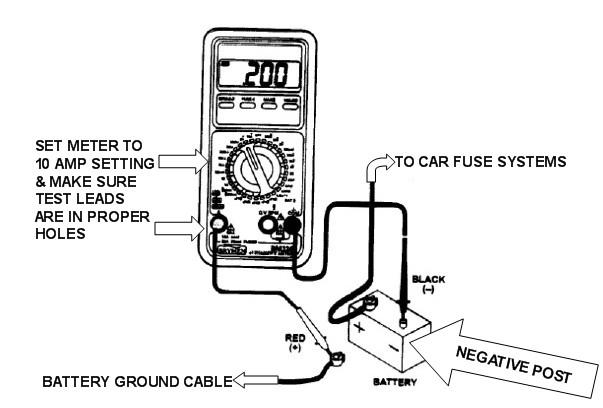
20-30 mA (milliampere) is normal but not more than 50 mA.
-
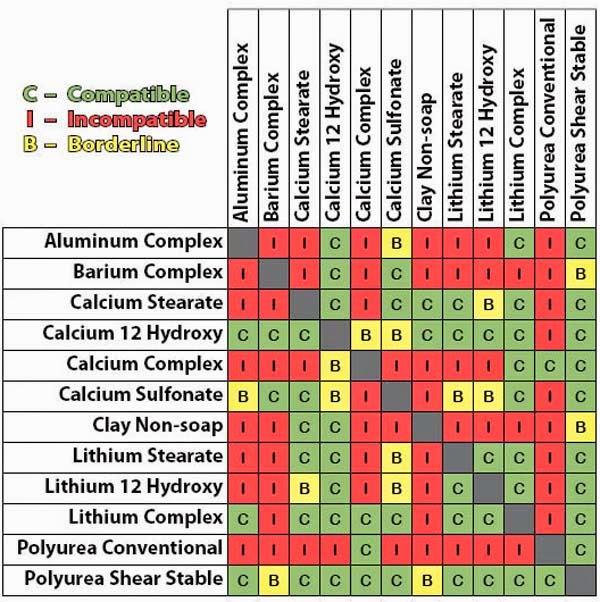
Mixing greases of the same or compatible base is no problem. If the grease base is not compatible then the lubricant oil can sperate or give no protection at all. When I can't determine what the grease base is I'll clean all the old grease off then apply new quality grease.. This is a compatibility chart for grease bases. The problem I run into is a lot of manufactures don't list the base type on the packaging.
-
No problem with air flow. There is a minimum clearance between the filter and shield of 1" and that's only in a few spots. The rest is 2" to wide open. The engine can breath like a race horse at Santa Anita.
-
Yes...Yes it is duct tape and it is the finest duck tape money can buy. Only the best for my truck. It was a little project I was trying out. I was making a heat shield for the BHAF out of the heat shielding that goes between a cars catalytic converter and the floor pan. This stuff works great, about 6 very thin aluminum layers sandwiched between two thicker sheets. 300°+ on one side and 95° on the other. The duct tape is to cover any sharp edges, then spry painter black. I took part of it off and ended with this. Yes that's my truck. It's gold over sliver. Under the hood is a dull gold. I haven't polished it yet.
-
@Mopar1970man Why are you insulating the hot part of the pipe from the condenser to the orifice tube? I thought that you would leave that uncovered to let the heat escape like in the condenser. You would only need to cover the pipe from the orifice tube, after the pressure drop, to the fire wall/evaporator to keep the cold in.Blue Chip Diesel has the write up on trouble shooting the vp 44. https://www.bluechipdiesel.com/troubleshooting-1It's a snowflake entitlement mentality. "I'm in a hurry". "You're in may way", "Don't inconvenience me", "My time is more important than your time". It's worse at night and the weekends when they're not in school or work.My wife says my breathes to much.I've used Murry A/C compressors from O'Reillys in a pinch. The last one I installed was for an 01 Chevy Taho with rear A/C, June 1, 2017. I paid $189 for it with a limited lifetime warranty. Here is a new Murry compressor from O'Reillys for $234. Now, that price is in Escondido, CA and I can't see why there is a $96 price difference between states. https://www.oreillyauto.com/shop/b/air-conditioning-16770/compressors---clutch-16796/a-c-compressor-12403/796587886e88?fitAttr_10076=With Clutch The other brands I've used have been Valeo , Sanden and York. These were for different Volvo models.Once the refrigerant is in a gaseous state the only way it can go back to a liquid is be compressed and sent through the condenser. A properly filled A/C system will not cause slugging. Over filled or filling the system with an inverted can will cause slugging. Insulating the piping after the orifice tube and before the evaporator is no problem. After the evaporator some auto manufacturer choose to insulate the accumulator. GM has done it with this products like this. https://www.ebay.com/p/A-C-Accumulator-Insulator-ACDelco-GM-Original-Equipment-15-10614/79416292?iid=282964073381&_trkparms=aid%3D222007%26algo%3DSIM.MBE%26ao%3D2%26asc%3D52475%26meid%3D84e53c92765446a885aca61308b093e9%26pid%3D100005%26rk%3D6%26rkt%3D12%26sd%3D161767073957%26itm%3D282964073381&_trksid=p2047675.c100005.m1851 Ford did it with a spray on insulation but it caused the accumulator made of steel to rust out, there was no way for the condensation to evaporate. Now they are made of aluminum. Mercedes covered the A/C lines in the 80's and 90's.See if this helps. .Heat always moves to cold, that's physics. So any part of the low pressure side of the A/C system from the expansion valve to the evaporator and accumulator is colder than their surroundings and will absorb the heat. This is extra heat that has to be removed from the system through the condenser. These 16 year old condensers aren't as efficient as when new so the system could use that added help of insulating the low pressure pipes, hoses and accumulator.




.JPG.22337ac518f69d637fee5d19e8815bb1.JPG)